Cloud Physics and Kinetic Rollout Violations
1. ABSTRACT
Standard Model Expectation: A collapse-driven dust cloud should admit a passive gravity-current / particulate-plume history in which front speed, height, and later lofting remain compatible with carried particle loading, passive mixing, drag, and ordinary buoyancy transition. A fast low front is not unusual by itself, and later lofting can occur if the mixture warms, dilutes, or sheds particle load.
Empirical Contradiction: The WTC cloud record shows a fast horizontal rollout, a tall coherent front, a later vertical rise after forward momentum decays, and bounded adjacent-plume separation. This report does not treat those features as a self-sufficient architecture proof. It tests whether passive gravity-current behavior plus ordinary thermal buoyancy can close the local cloud record under the stated constraints.
Audit Objective: Determine whether the cloud can be carried as passive rollout and ordinary buoyancy alone, or whether the record instead forces an additional suspension, lofting, or sorting feature beyond a simple settling plume. If later lofting occurs while the cloud remains cool-to-ambient and appreciably particle-laden, passive buoyancy closure is constrained and the transition path itself has to be shown.
Audit Rule(s): Audit Rule 1 (The Comminution Limit) where large fine-mode production is asserted. Supporting: Audit Rule 3 (The Geometric Flux Constraint) where sharp front geometry / coherent wall structure and localized lofting are treated as geometry-sensitive signatures.
Model A steelman (and the discriminator)
- Steelman: Model A closes this report only if one documented passive cloud-evolution history explains the fines-rich entry, the sustained tall front, the later lofting phase, and any retained plume separation without fragmenting the explanation into separate local saves.
- Discriminator: This report's discriminator is the combined cloud behavior: a sustained tall front, later rise under cool-to-ambient constraints where invoked, and bounded adjacent-plume separation. The claim is not that any one of these proves the alternative, but that their conjunction pressures a purely passive gravity-current plus hot-gas narrative.
- What Model A must show: a bounded, physically consistent cloud-evolution path with specified particle loading, buoyancy transition, and street-geometry effects that reproduces the observed rollout, later lofting, and separation behavior together.
See: APPENDIX — Model A Steelman & Failure Modes (comminution/phase-state closure: C1).
2. CONTROL PARAMETERS
A. Two-Phase Rollout Baseline
We treat the dust rollout as a two-phase gravity current or turbulent particulate plume (air + particulates).
Front-velocity baseline (gravity current):
($\(U_{front} \sim Fr \sqrt{g' H}), where (g' = g\frac{\Delta \rho}{\rho_{ambient}}\)$ ) and ($\(Fr\)$ ) is an order-1 Froude number depending on regime and mixing.
Audit use: a fast ground-hugging front is not enough on its own to force a new mechanism. The question is whether the front geometry, implied loading, and later evolution remain compatible with passive rollout alone.
B. Lofting Transition and Thermal Constraint
A fast ground-hugging front implies net negative buoyancy near the base, but later lofting can occur if particle concentration drops, the cloud entrains and warms, or local stratification changes.
Thermal buoyancy baseline: later rise is easiest to explain if $\(T_{cloud} > T_{ambient}\)$ or if the cloud has already shed enough particle load to become effectively lighter.
Audit use: if lofting occurs while the cloud is still described as cool-to-ambient and still strongly particle-laden, thermal buoyancy is constrained as the primary driver and an added lift or segregation term has to be checked.
C. Plume Separation / Sorting Constraint
Distinct adjacent plumes can remain visibly separate for a time if source state, street geometry, and particle-loading contrast slow their passive mixing.
Audit use: if separation persists longer or cleaner than expected for the implied mixing regime and geometry, a property-dependent sorting term becomes relevant. This report treats that as a secondary discriminator rather than a standalone proof.
D. Entry Condition from Fines Production
This report begins once a fines-rich cloud is already present. The energy and phase-state burden of producing that cloud is carried more directly in Report 1, Report 2, and Report 9. Here it matters as the initial condition for the later cloud behavior.
3. DATA CURATION & ANALYSIS
EVIDENCE FILE A: Early Fines-Rich Cloud Entry
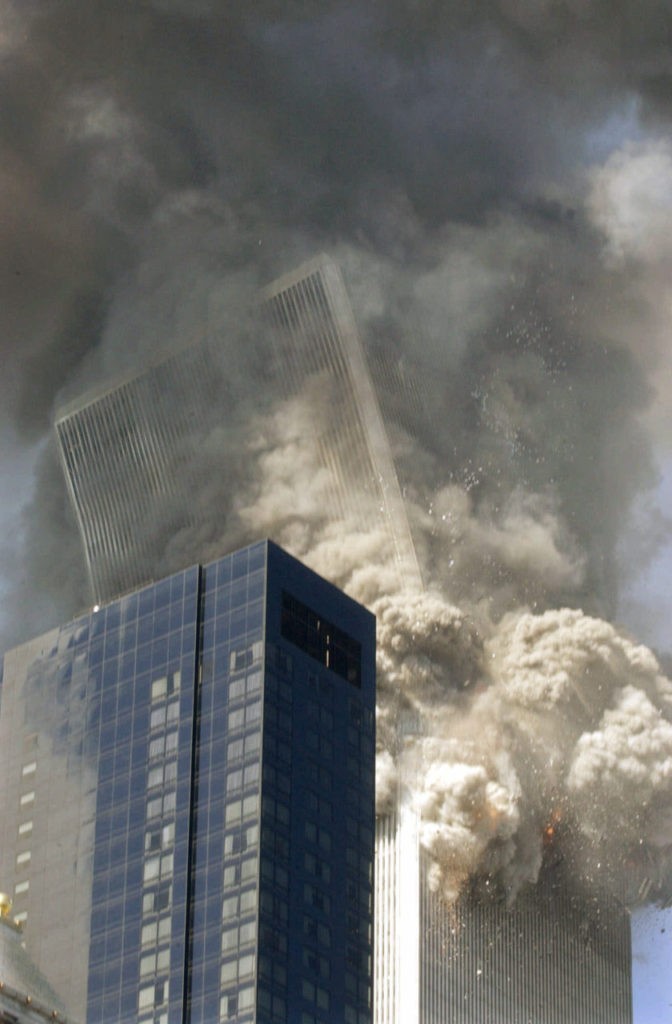
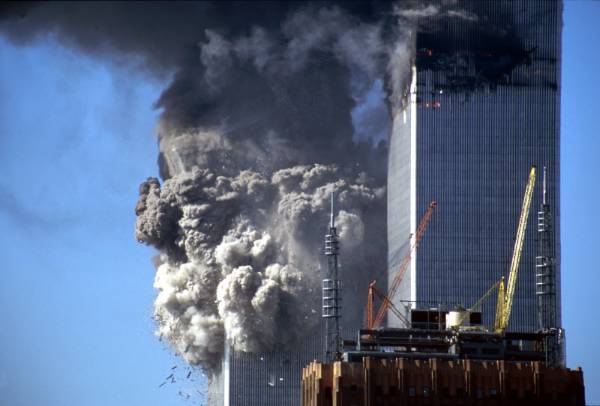
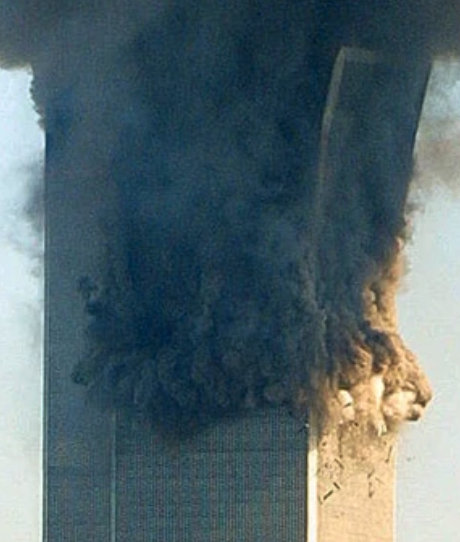
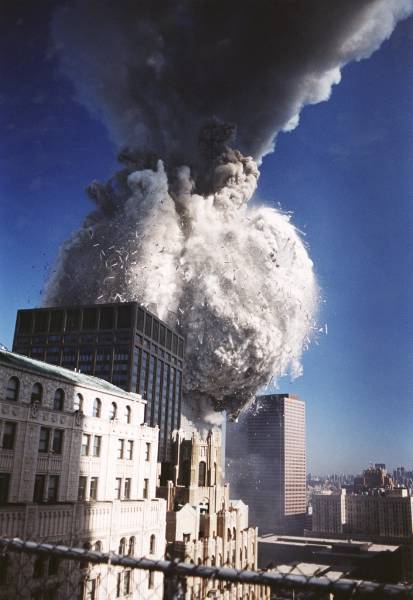
Figures 85-88. WTC2 upper section tilting and dissolving into a particulate-dominant cloud, showing rapid loss of structural cohesion before any intact ground-impact sequence is visible.
- Observation: The upper section of WTC 2 begins as a tilting mass and then transitions rapidly into an expanding particulate-dominant cloud before any intact ground-impact hammer sequence is visible.
- Model A local path: a collapse history in which the apparent mid-air loss of outline remains consistent with the coarse-rubble and impact-work path Model A needs downstream. Generic references to fragmentation or visual occlusion do not close this entry condition.
- Local discriminator: This file is not the strongest cloud-physics line by itself. What it does provide is the entry condition: the rollout begins from a fines-rich, coherence-poor cloud rather than from a clean intact block whose main cloud behavior appears only after impact.
- Local Model B reading: A rapid fines-producing decohesion pathway fits this entry condition more naturally than an impact-ready hammer sequence. The narrower subtype is carried elsewhere in the dossier.
- Constraint judgment: The cloud behavior that follows in this report must be read against this fines-rich entry condition, not as an ordinary late dust byproduct of an otherwise intact impact sequence.
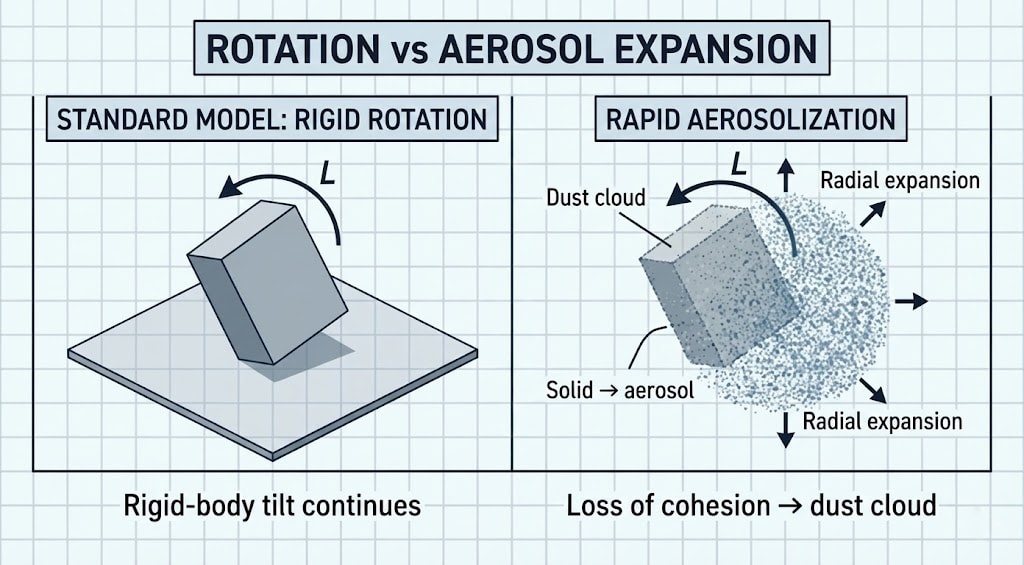
Diagram 38. Comparison diagram showing rigid-body rotation versus particulate expansion during descent.
EVIDENCE FILE B: Sustained Tall Front and Weak Settling Gradient
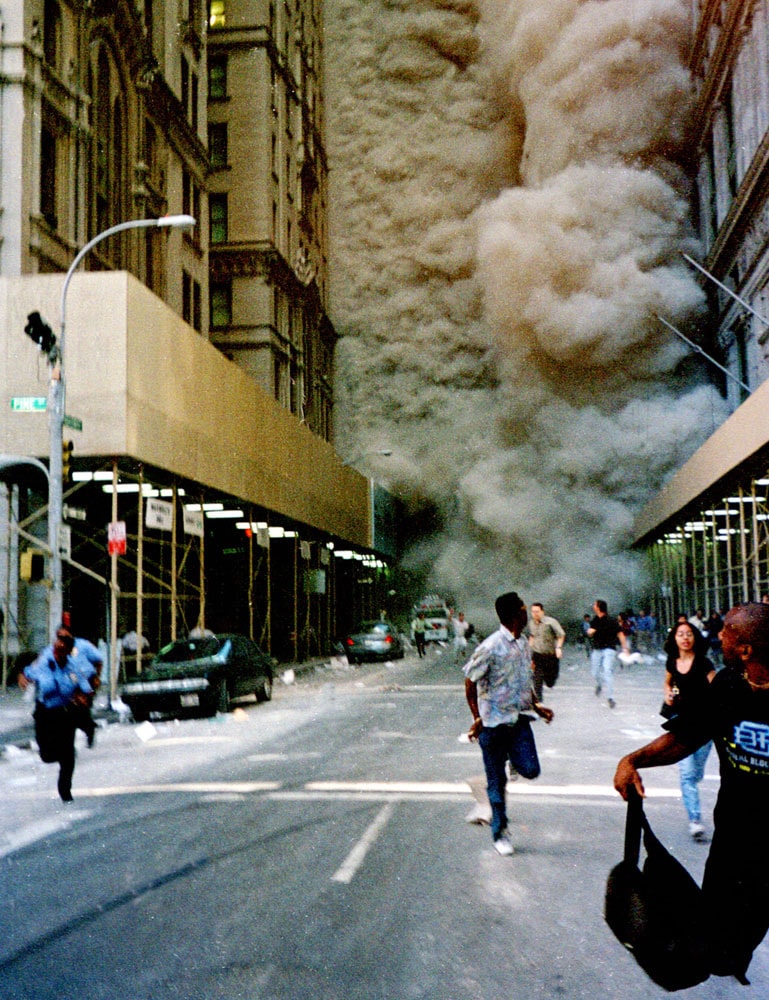
Figure 89. (9/11/01) A tall dust front moves down Broadway toward Pine Street, maintaining substantial height and opacity over distance. Image by Kelly Price/REUTERS.
- Observation: A tall dust front, at least roughly ten stories high, moves down Broadway while maintaining substantial height and optical density rather than quickly grading from dense-bottom to wispy-top flow.
- Model A local path: a passive gravity-current state in which front height and optical density remain jointly high over distance under the actual street geometry and carried particle-loading regime. Generic references to passive mixing or canyon flow do not close this file.
- Local discriminator: A tall front is not automatically anomalous. The pressure point is whether the implied opacity and particle loading can remain jointly high aloft over distance without a more specific mixing and size-distribution regime than the passive account usually states. If that regime is being carried, Model A has to show it rather than just invoke mixing in the abstract.
- Local Model B reading: If the high-opacity aloft is real and persistent, the carry-forward requirement is an added suspension or segregation feature beyond simple passive settling. A dielectrophoretic (DEP)-like lift or segregation term is one downstream candidate, but this report does not settle that subtype.
- Constraint judgment: This file becomes a real burden on a purely passive gravity-current explanation if height and loading remain jointly high over distance. It is one half of the report's main conjunction, not a standalone proof.
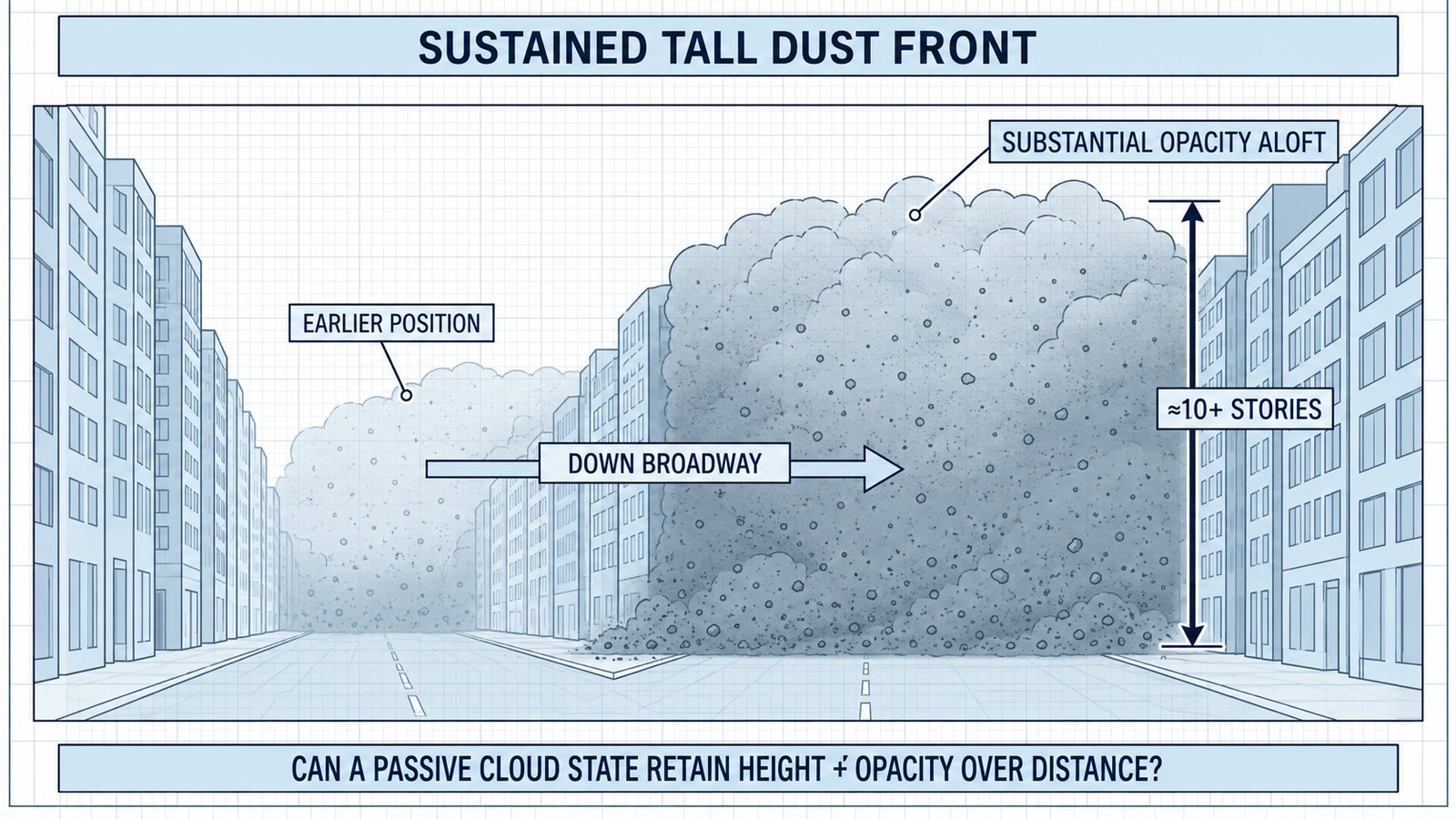
Diagram 39. Ordinary settling gradient versus a sustained tall front: the question is whether passive cloud evolution can maintain the observed height and loading together.
EVIDENCE FILE C: Later Lofting After Rollout Decay
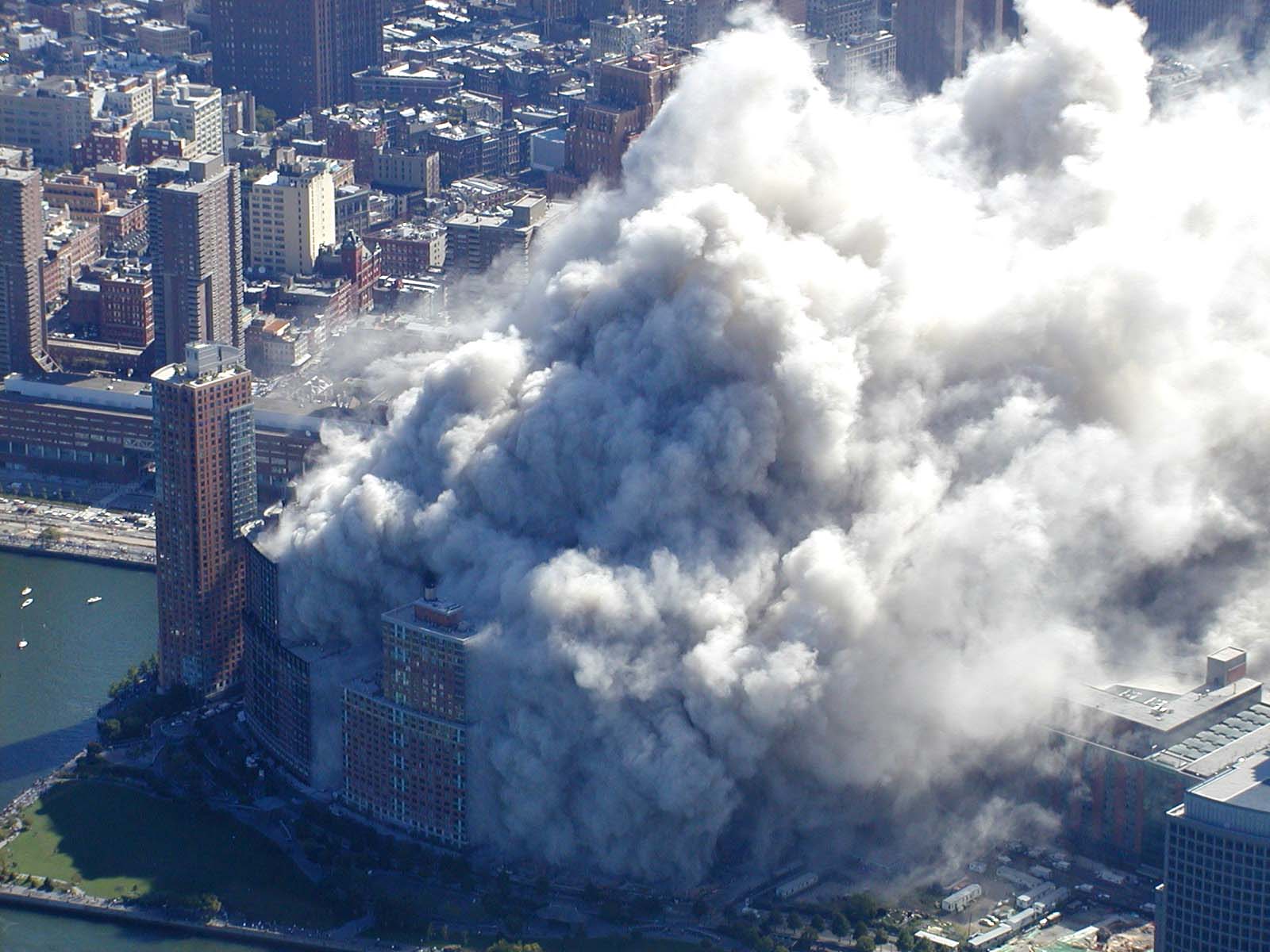
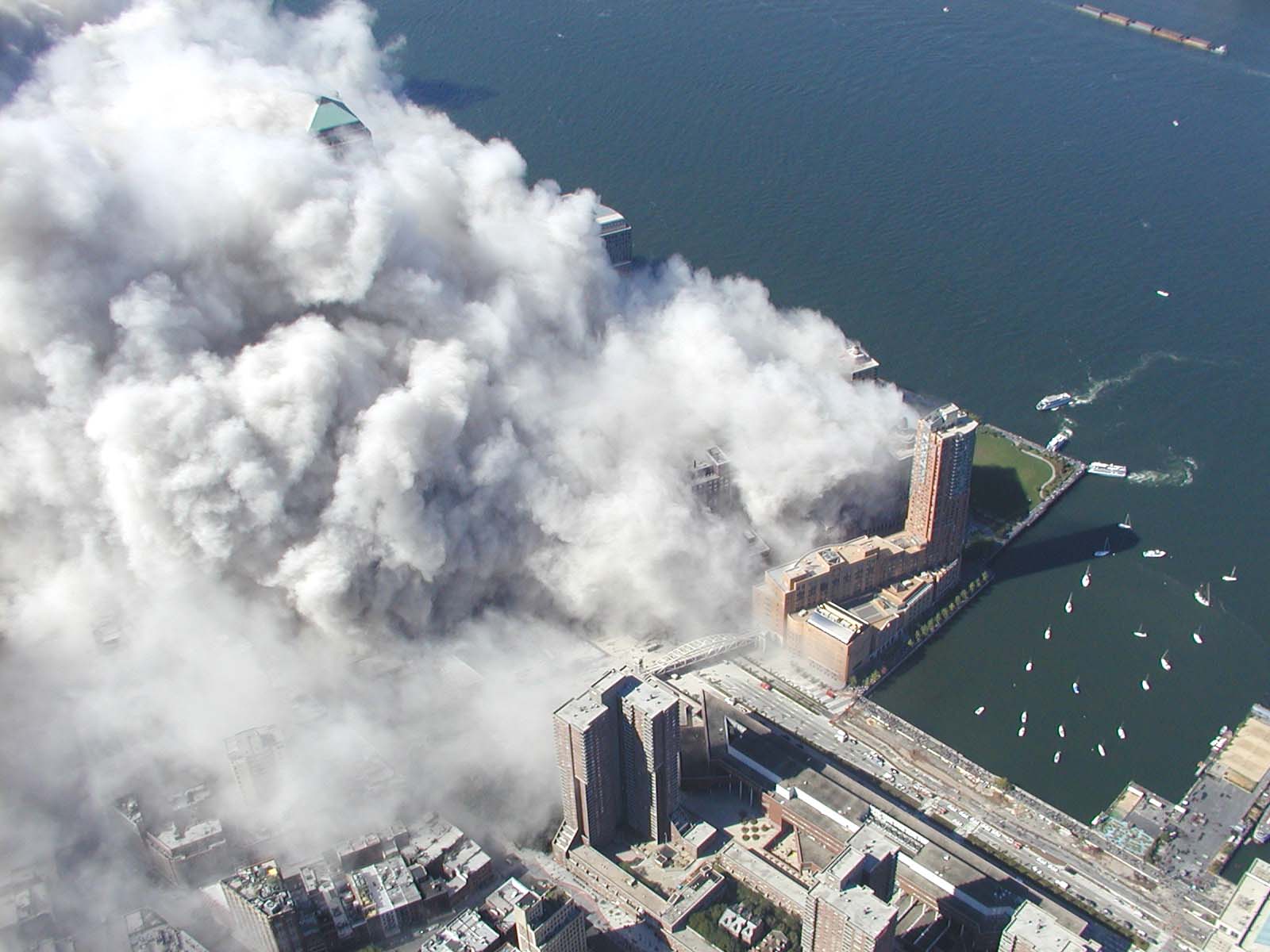
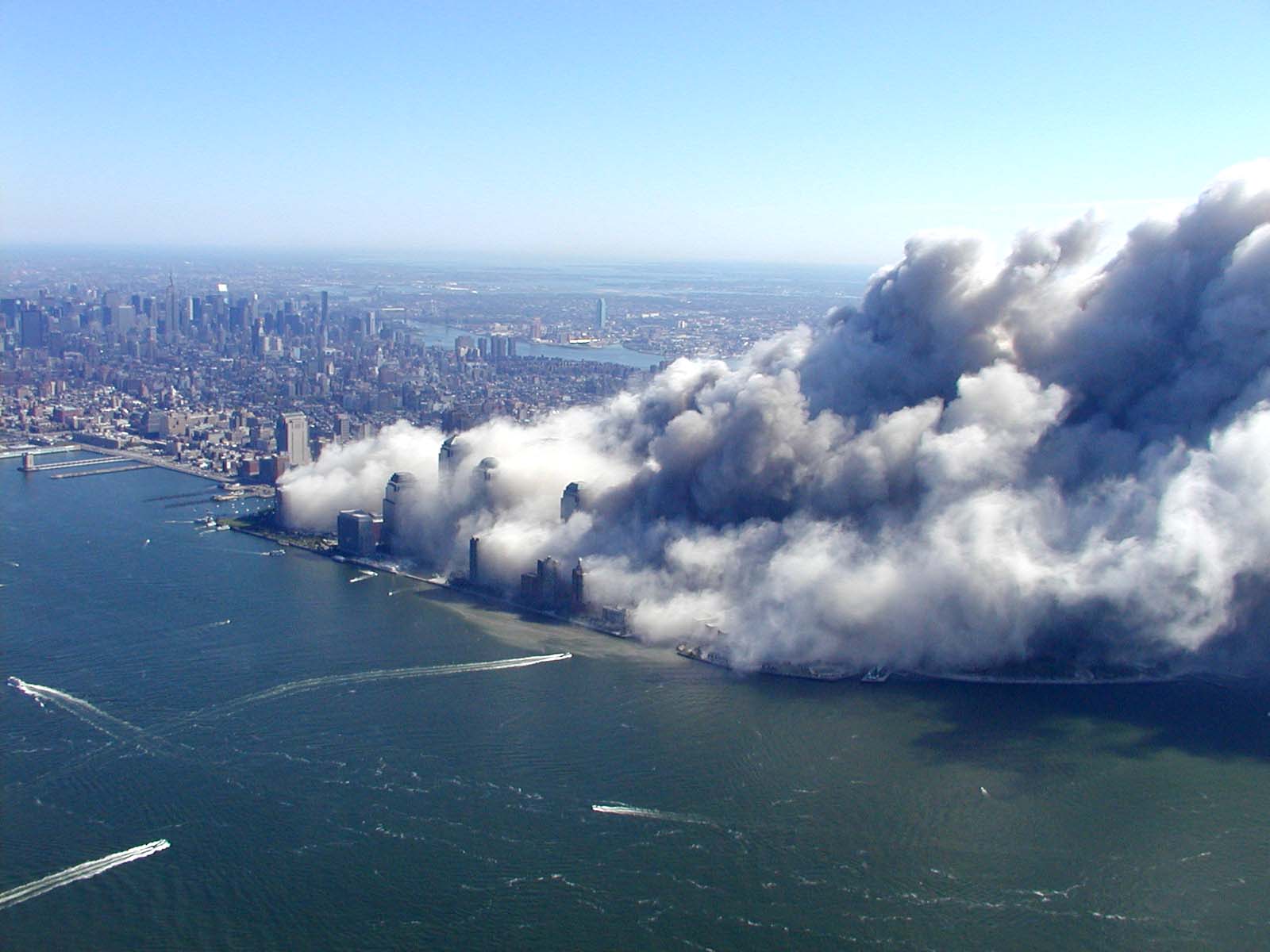
Figures 90-92. Dust cloud rolling out horizontally and then rising vertically after forward momentum decays.
- Observation: The dust cloud rolls out horizontally, slows near Battery Park City, and then shows a later vertical rise after the main forward momentum has decayed.
- Model A local path: a time-ordered passive transition in which the same cloud loses enough load or gains enough buoyancy to rise when and where observed while still matching the earlier gravity-current phase. Generic references to passive mixing, sedimentation, warming, or local circulation do not close the transition.
- Local discriminator: The issue is not lofting by itself. It is lofting under the cloud-state constraints actually carried here. If the same cloud is first carried as a fast ground-hugging front and later as a rising cloud while still described as cool-to-ambient and appreciably particle-laden, then ordinary thermal buoyancy is not yet closure; the transition path itself has to be shown.
- Local Model B reading: Under that narrower condition, the carry-forward requirement is an added lift or segregation term beyond passive buoyancy transition. A DEP-like body-force or sorting term is one downstream candidate, but this report only forces the broader requirement.
- Constraint judgment: This is the strongest cloud-specific line in the report when paired with Evidence File B: a sustained tall front followed by later lofting under cool-cloud constraints.
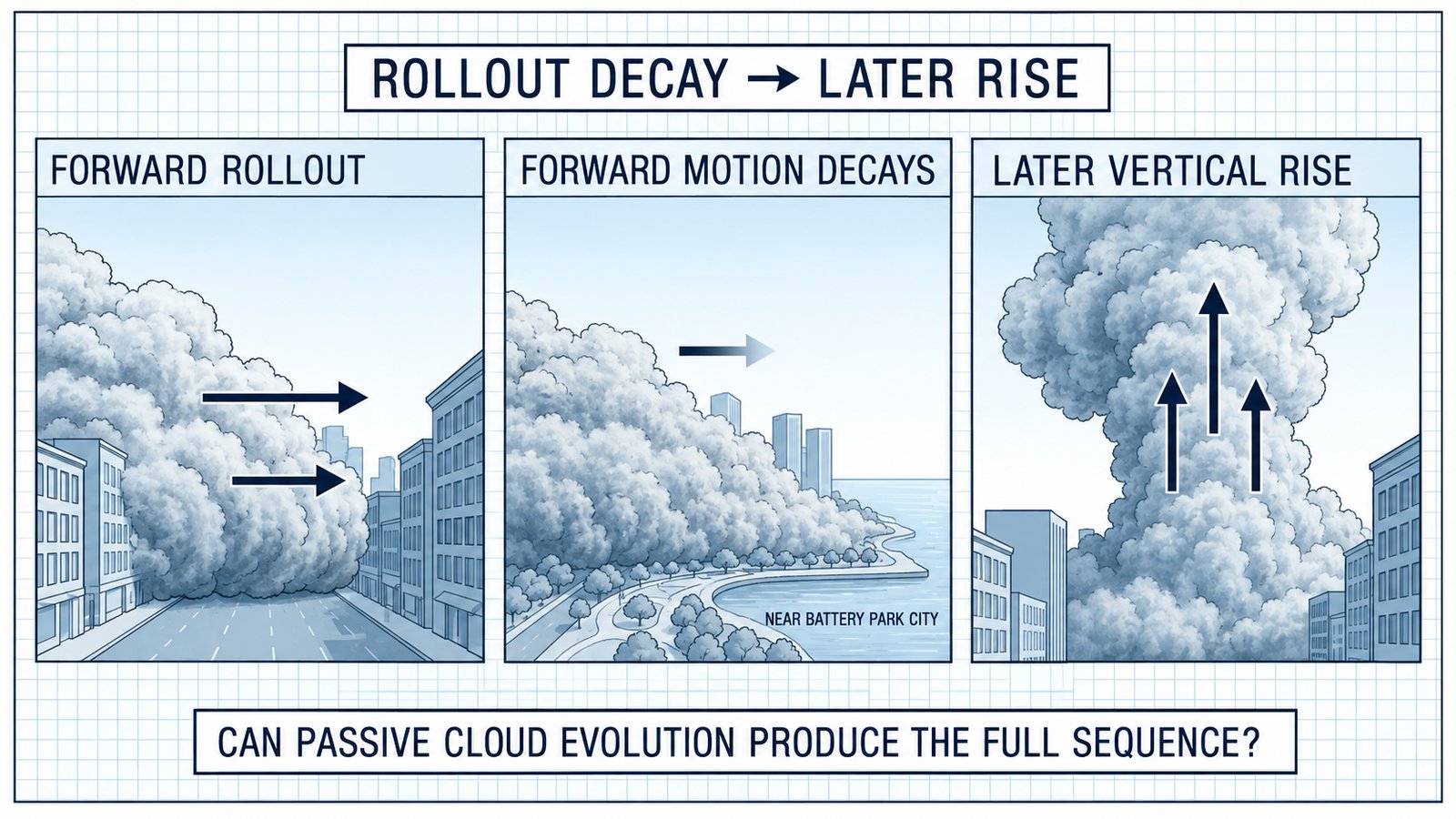
Diagram 40. Horizontal rollout decay followed by later vertical rise: the audit asks whether passive evolution can reproduce the full sequence.
EVIDENCE FILE D: Persistent Adjacent Plume Separation

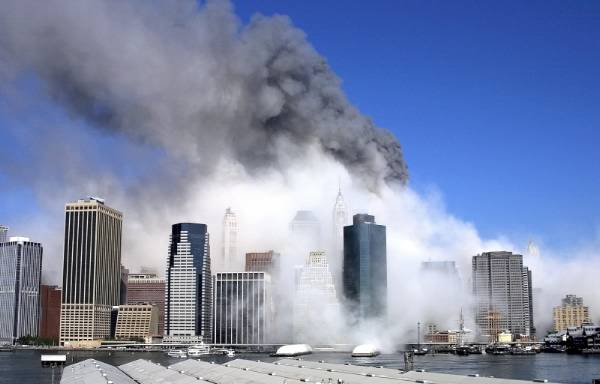
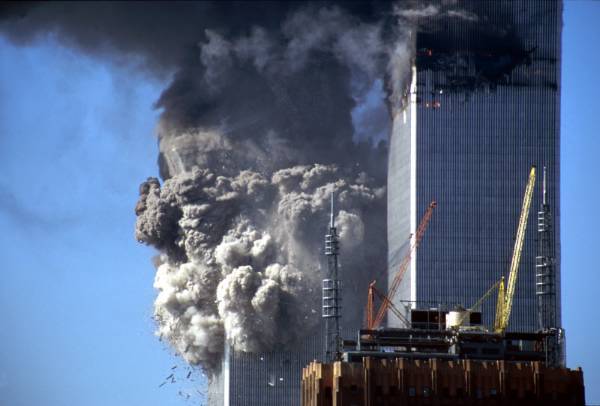
Figures 94-95. Streams of dark fumes and lighter dust flowing adjacent without rapid homogenization, used here as a bounded plume-separation problem.
- Observation: Darker and lighter plumes appear to travel adjacent to one another without rapid homogenization.
- Model A local path: one documented source-state and mixing history compatible with the implied passive-mixing regime. Generic references to source contrast or layering do not close the persistence claim.
- Local discriminator: This file is secondary. It matters only if the separation persists longer or cleaner than the implied mixing regime and geometry would ordinarily allow.
- Local Model B reading: If the persistence is real, a property-dependent sorting term becomes a bounded carry-forward requirement. This report does not decide whether that term is field-assisted or purely compositional.
- Constraint judgment: This is a secondary discriminator and corroborating closure test, not the main burden in the report.
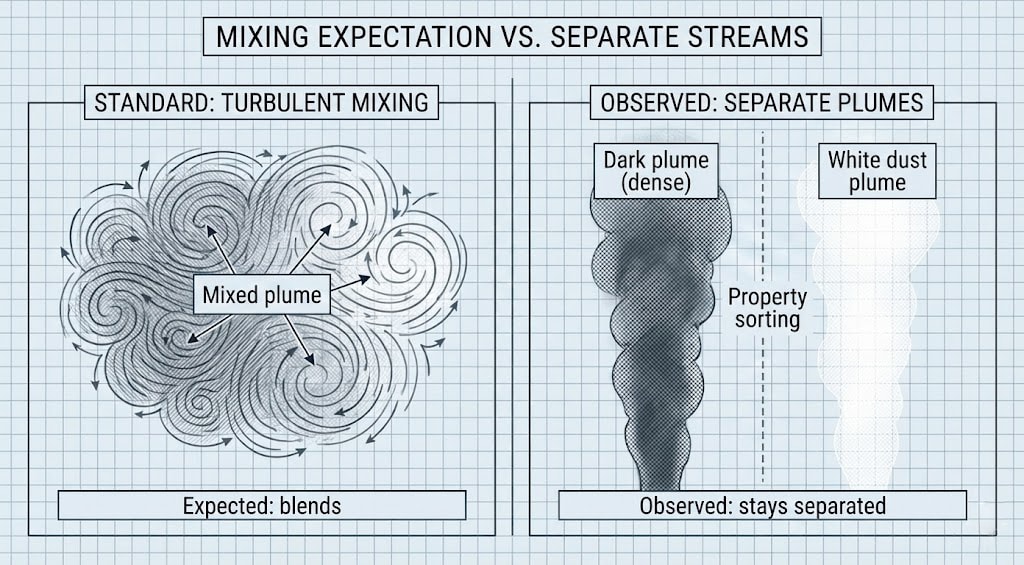
Diagram 41. Comparison diagram showing ordinary turbulent mixing versus persistent adjacent-plume separation.
4. CORROBORATING SCENE OBSERVATIONS
Objective: carry only the scene observations that sharpen the cloud-state constraint without turning witness material into standalone proof.
DATA SET A: Cool-to-Ambient Dust Exposure
Battery Park exposure
- Observation: A witness engulfed in the particulate flow described the dust as cool-to-ambient rather than like a hot combustion front, while also reporting immediate mucosal and dermal irritation consistent with alkaline dust.
- Use in this report: This is the key corroborating cloud-state constraint. It does not decide the mechanism, but it makes a purely hot-gas lofting account harder to carry at that location.
DATA SET B: Dust-Dominant Phase-State Impressions
Early scene character
- Observation: Multiple descriptions emphasize a dust-dominant cloud and weak macro-debris presence rather than a hot smoke-front plus chunk-dominant debris transition.
- Use in this report: This reinforces Evidence File A's fines-rich entry condition. The full comminution and particulate-speciation case is carried elsewhere in the dossier.
Cross-check: The scene record does not prove the cloud mechanism by itself. It sharpens the local state carried by the report: a cool-to-ambient, fines-rich cloud whose later behavior still has to be explained.
5. LOCAL ALTERNATIVE PICTURE
The relevant question here is not the full SCIE architecture and not a narrow cloud subtype. It is what forcing feature is required if the passive gravity-current and hot-buoyancy account fails this cloud test.
The strongest line in this report is the conjunction of Evidence Files B and C: a sustained tall front followed by later lofting while cool-to-ambient constraints remain in play. Evidence File A supplies the fines-rich entry condition for that cloud behavior. Evidence File D is secondary; it matters only if the adjacent-plume separation remains cleaner or longer-lived than ordinary source-state contrast and passive mixing would ordinarily allow.
At the level relevant here, the carry-forward requirement is broader than a precise named sub-mechanism. The report forces an additional suspension, lofting, or property-sorting feature beyond a purely passive settling plume if the combined cloud constraints hold.
Within the dossier's downstream mechanism map, the main carry-forward candidates are bounded:
- DEP-like lift / segregation: a field-assisted lift or sorting family that can explain later lofting or suspension if passive buoyancy and passive mixing do not close the record.
- Rapid fines-producing decohesion: the upstream phase-state shift that supplies the particulate-rich cloud before the later rollout and lofting sequence.
This report does not decide the narrower subtype. At the level relevant here, it says the cloud cannot simply be treated as a passive gravity current plus ordinary hot-gas lofting if the combined constraints remain in force.
This stronger carry-forward reading is neutralized only if one documented passive cloud-evolution history closes the tall front, the later rise, and any retained plume separation together under the actual temperature and particle-loading record.
6. CLOUD-PHYSICS TEST PROTOCOL
Objective: distinguish a passive gravity-current / ordinary-buoyancy account from a cloud state that requires an added suspension, lofting, or sorting term.
TEST A: Opacity / Particle-Loading Compatibility
- Sample: imagery of the tall front, constrained by viewing geometry, plume height, and independent particle-size information where available.
- Model A expectation: a passive gravity current can remain tall, but the implied opacity aloft must remain compatible with passive mixing acting on the actual particle-size and loading regime.
- Alternative-path expectation: if opacity and loading remain jointly too strong aloft for the passive regime carried by Model A, an added suspension or segregation feature is required.
TEST B: Thermal History vs. Loft Timing
- Sample: correlated witness exposure, video timing, and any bounded local temperature information for the cloud during the Battery Park rise phase.
- Model A expectation: later lofting should coincide with warming, dilution, or a clear loss of particle load sufficient to remove the density trap.
- Alternative-path expectation: if lofting occurs while the cloud remains cool-to-ambient and still appreciably particle-laden, a non-passive lift or segregation term is required.
TEST C: Plume-Separation Persistence
- Sample: time-ordered imagery of the darker and lighter adjacent plumes, constrained by wind field, source geometry, and viewing interval.
- Model A expectation: visible separation can persist for a time through ordinary source-state contrast, but should still be compatible with the implied passive-mixing regime.
- Alternative-path expectation: if separation remains too clean or too persistent for that passive account, a property-dependent sorting term must be carried forward.
7. LOCAL CONSTRAINT JUDGMENT
- Strongest local line: The report's main burden on Model A is the conjunction of a sustained tall front and later lofting under cool-cloud constraints. Evidence File A supplies the fines-rich entry condition; Evidence File D remains secondary.
- Measurement refinement still needed: the actual particle-size/loading regime needed to sustain opacity aloft, the local thermal history during the Battery Park rise phase, and whether adjacent-plume separation persists longer than the carried source-state contrast and passive-mixing regime would allow.
- Why Model A is burdened here: A passive gravity-current account can explain some rollout behavior, and passive buoyancy can explain some later rise. The burden comes from closing both within one bounded cloud history under the same state constraints.
- Local conclusion: This report forces a mechanism feature beyond Model A on this point: if the combined cloud constraints hold, the cloud cannot be carried as a purely passive gravity current with ordinary hot-buoyancy recovery.
- Bounded positive handoff: The positive mechanism development is carried in Report 9, Report 14, and the bridge appendix. Full system integration is carried in synthesis, bridge, and reconstruction.