Athermal Particulate Suspension and IMD Ultrafine Fraction Analysis
1. ABSTRACT
Standard Model Expectation: In a gravity-driven collapse accompanied by fires, particulate behavior should be dominated by gravity settling, ordinary turbulent dispersion, and combustion-related smoke production. Coarser dust generally settles faster than ultrafines, buoyant smoke rises from heat, and wetting a genuinely hot surface should ordinarily produce visible evaporation or steam.
Empirical Contradiction / Local Mechanism Problem: Forensic photography and aerosol studies carry three linked signatures: ground-plane particulate lofting without clear local thermal buoyancy, an elevated ultrafine mode in the sub-micron range, and iron-rich spheres with relatively weak soot-dominant framing. The local issue is not merely that dust persisted. It is that Model A must explain how the particulate stayed lofted, what the ultrafine fraction is actually made of, and how the thermal history fits the observed morphology.
Audit Objective: Determine whether ordinary settling, combustion, and passive resuspension can close the observed suspension and ultrafine record, or whether the local record instead requires non-buoyant lift plus a stronger dissociation and selective-coupling pathway.
Audit Rule(s): Audit Rule 1 (The Comminution Limit) where substantial primary mineral and metal ultrafines are asserted. Supporting: Audit Rule 3 (The Geometric Flux Constraint) where ground-plane, localized lofting and segregation patterns suggest geometry-sensitive forcing rather than uniform buoyant smoke.
Model A steelman (and the local mechanism question)
- Steelman: Model A closes this report only if one bounded ordinary suspension-and-aerosol history explains the localized lofting, the ultrafine mode, and the iron-rich-sphere record without fragmenting the answer into turbulence here, condensation there, and hot spots elsewhere.
- Discriminator: This report’s discriminator is the coupled suspension and ultrafine record where asserted: sub-micron mineral and metal fractions, sustained lofting without clear point-of-observation thermal buoyancy, and selective heating signatures that do not read like bulk fire soot.
- What Model A must show: an airborne, not merely settled, particle-size and composition account plus a force and thermal history that produces the asserted lofting and ultrafine signatures without missing collateral effects.
Local Model B capsule
At the level of this report, the local Model B reading has four linked parts:
- Dielectrophoretic (DEP)-like lift: a field-gradient lift term for ground-plane particulate lofting where ordinary settling, quiescent air, and weak thermal indicators do not close the observation.
- Interferometric Molecular Dissociation (IMD)-type ultrafines: the broad mixed-material dissociation pathway for primary building-material ultrafines if speciation shows mineral and metal phases rather than soot and sulfate dominance.
- Coulomb-type fragmentation / dielectric saturation: the concrete-, masonry-, and ceramic-side breakup branch where the ultrafine record resolves toward charge-driven dielectric failure rather than a mixed-source dissociation picture.
- Electron-cyclotron resonance (ECR)-regime selective coupling: a selective heating and softening pathway for iron-bearing phases where iron-rich spheres and weak carbon framing are carried together.
- Why this linked stack fits here: this report is not carrying unrelated anomalies. It is carrying one particulate environment in which lofting, ultrafine production, dielectric-side mineral breakup, and selective iron-phase heating all resist a simple bulk-fire and passive-settling closure.
- What would materially contract this linked mechanism picture: bounded local turbulence or buoyancy closes the lofting, the ultrafine mode resolves into soot and sulfate-dominant secondary aerosol, and the sphere record reduces to ordinary dirty fire products.
See: APPENDIX — Model A Steelman & Failure Modes (thermal-history and lofting veto: C3a).
2. CONTROL PARAMETERS
Suspension Force Balance
We treat the particulate suspension as a vertical force-balance problem:
Suspension discriminator: If particulate lofting ($\(v_z>0\)$) is observed under apparently quiescent local flow and no clear point-of-observation thermal buoyancy indicators, then purely aerodynamic and thermal explanations do not close the observation and a non-buoyant lift term must be carried in the balance.
Wetting / buoyancy check: Where water application is documented at the observation point, lack of obvious steaming weakens a hot-surface buoyancy reading even though it does not, by itself, eliminate all hidden hot-spot possibilities.
Composition discriminator: Ultrafines can arise from more than one pathway. The audit question is therefore not particle size alone, but speciation. If the ultrafine mode is shown to be dominated by primary building-material phases rather than soot and sulfate-rich secondary aerosols, the local record burdens an ordinary combustion reading.
Morphology discriminator: Iron-rich spheres require at least localized transient softening or melting sufficient for surface-tension spheroidization. If that morphology is carried together with weak soot-dominant framing or minimal adjacent organic charring, the local thermal history is more selective than a bulk fire account.
3. DATA CURATION & ANALYSIS
EVIDENCE FILE A: Athermal Particulate Lofting
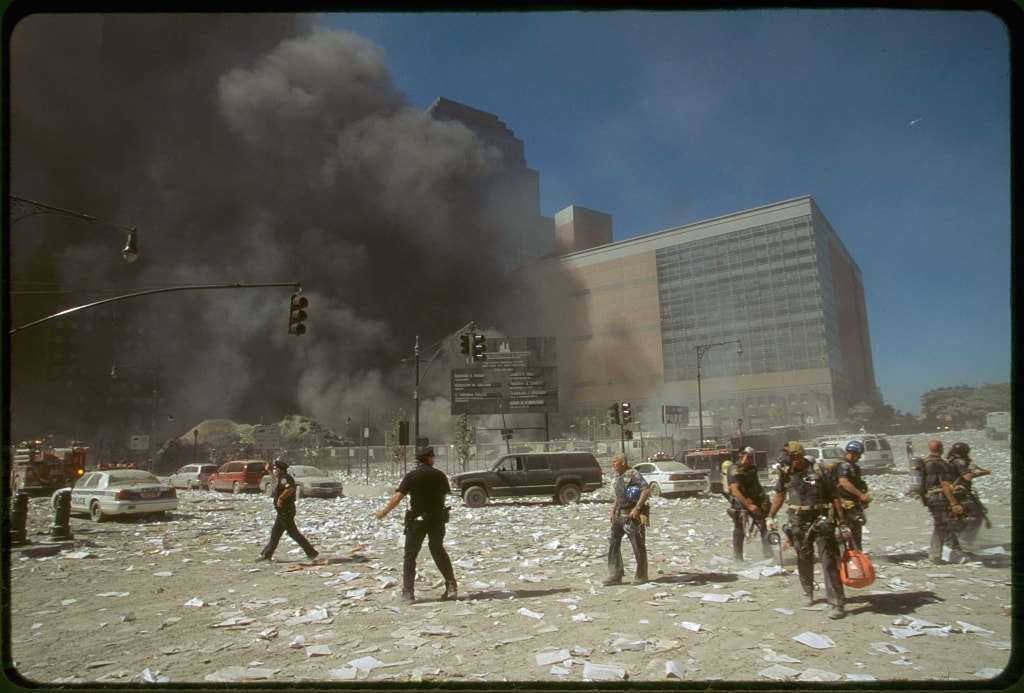
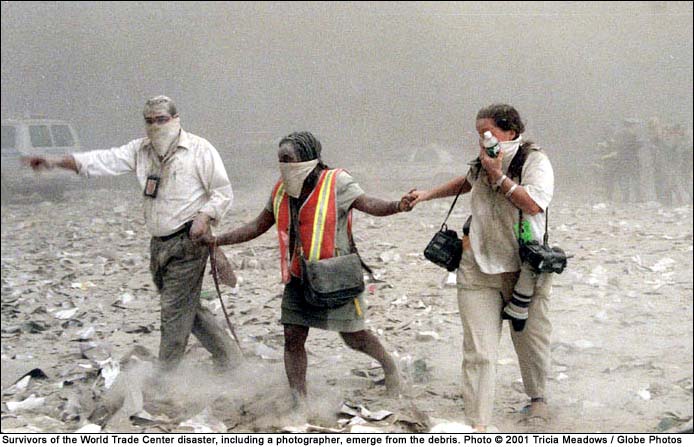
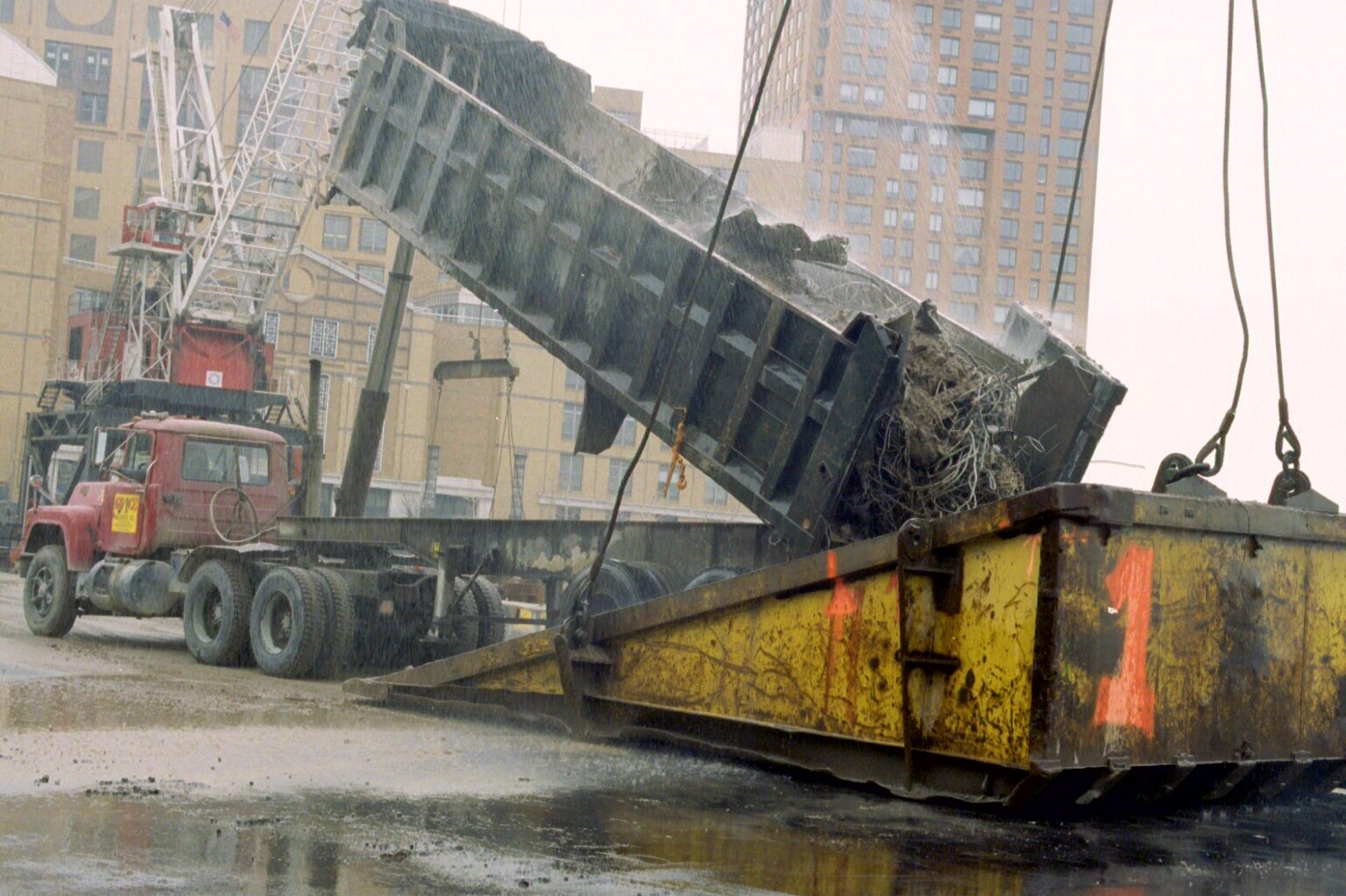
Figures 76-78. Ground-plane particulate lofting and later debris-pile emission retained here as a suspension and thermal-history problem, not as a free-standing mechanism proof.
- Observation: Photography shows fine particulate lofting around pedestrians and from debris surfaces without an obvious local gust or a strong visible thermal plume, with the strongest motion carried near feet and debris surfaces rather than rising into a broad overhead column. Later wetting imagery shows continued emission without visible steam.
- Model A local path: a bounded lofting account in which residual turbulence, pedestrian-induced flow, vehicle wakes, weakly captured steam, or intermittent hot spots keep dust mobile without requiring a non-standard lift term.
- Local discriminator: Ordinary entrainment and buoyancy need actual local drivers. When the air at the observation scale reads as comparatively still, when the lofting is concentrated near the ground plane, and when wetting does not show an obvious steam signature, passive settling plus generic turbulence no longer closes the observation cleanly. If those drivers are being carried, Model A has to identify them rather than invoke them in the abstract.
- Local Model B reading: A dielectrophoretic-like lift term fits localized, non-buoyant ground-plane lofting more naturally than a purely thermal or aerodynamic resuspension story.
- Constraint judgment: Any admissible mechanism class carried forward from this report must explain why particulate remains locally lofted without clear thermal buoyancy or a clearly identified aerodynamic driver.
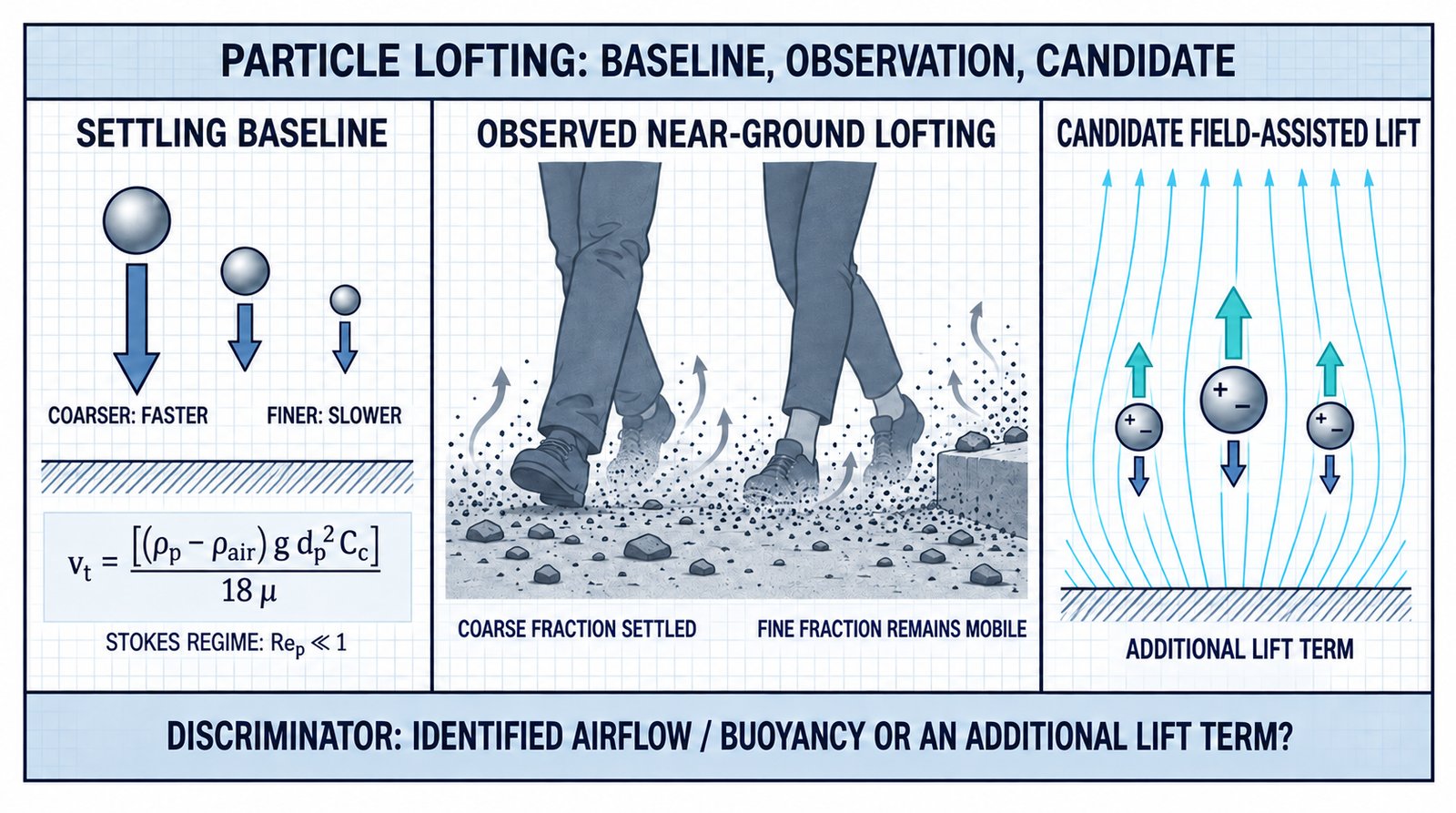
Diagram 34. Baseline settling, observed lofting, and a candidate field-lift path; the first audit is whether airflow, turbulence, or buoyancy closes the observation.
EVIDENCE FILE B: Ultrafine Particle Distribution
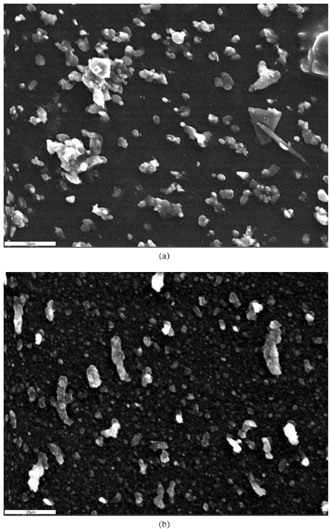
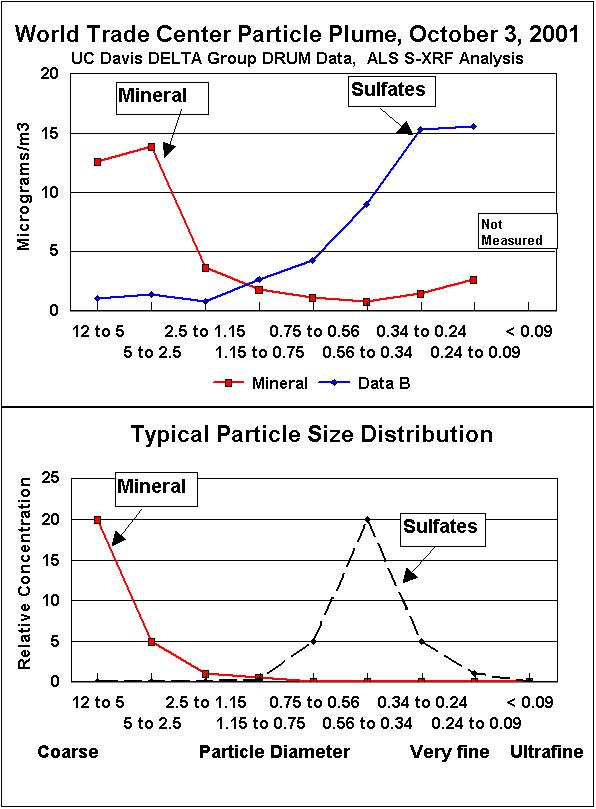
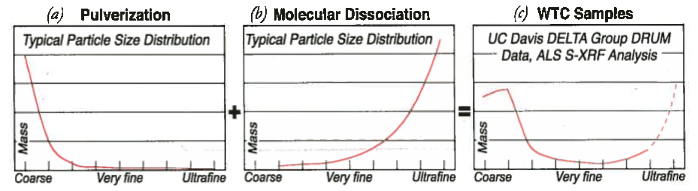
Figures 79-81. The report carries these data as an ultrafine-size and speciation question: what is in the sub-micron mode, and how was it produced?
- Observation: Aerosol studies identify elevated ultrafine counts in the 90-260 nm range. The carried discriminator is not size alone, but whether this mode contains primary building-material phases rather than soot and sulfate-dominant combustion aerosols.
- Model A local path: a bounded aerosol-production history in which fire aerosols, hot-vapor condensation, and mechanically generated fines still account for the sub-micron mode without a stronger dissociation pathway.
- Local discriminator: Ultrafines can arise from several sources, so the decisive question is speciation. If the ultrafine mode is materially populated by silicates, metals, or other primary building-material phases rather than a soot and sulfate-heavy combustion signature, the ordinary fire-aerosol account fails as the primary closure for that mode.
- Local Model B reading: Interferometric Molecular Dissociation (IMD)-type dissociation is the leading broad local reading if speciation supports primary lattice-derived ultrafines rather than secondary combustion aerosols. Coulomb-type fragmentation / dielectric saturation is the dielectric-side branch where the ultrafine mode resolves more specifically toward concrete-, masonry-, or ceramic-dominant breakup.
- Constraint judgment: Any admissible mechanism class carried forward from this report must explain not just the existence of sub-micron particles, but why their composition and distribution take the form asserted in the record.
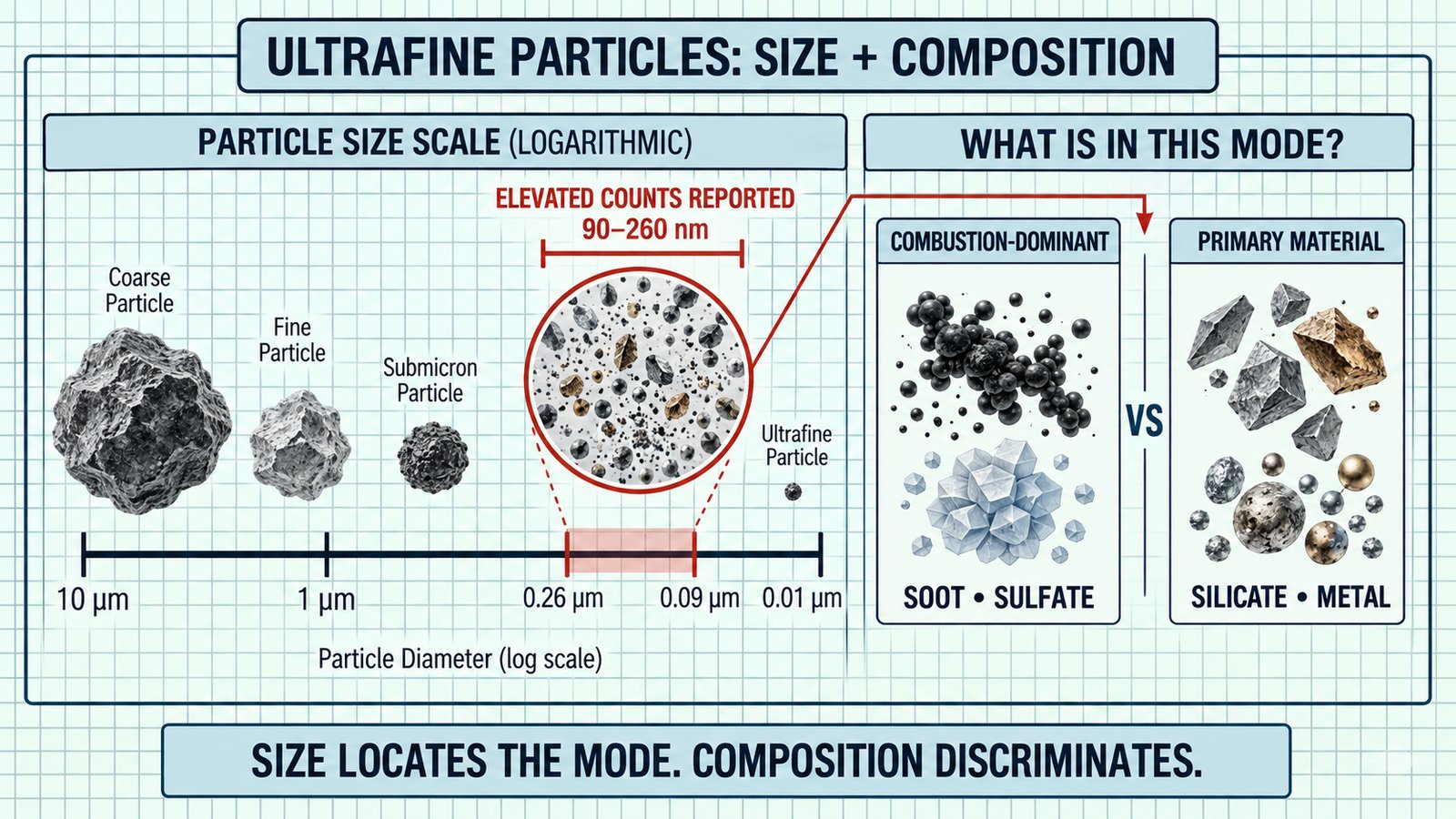
Diagram 35. Particle size locates the mode; composition determines whether ordinary soot, sulfate, combustion, and crushing pathways close the observed ultrafine fraction.
EVIDENCE FILE C: Iron-Rich Spheres and Weak Soot Framing
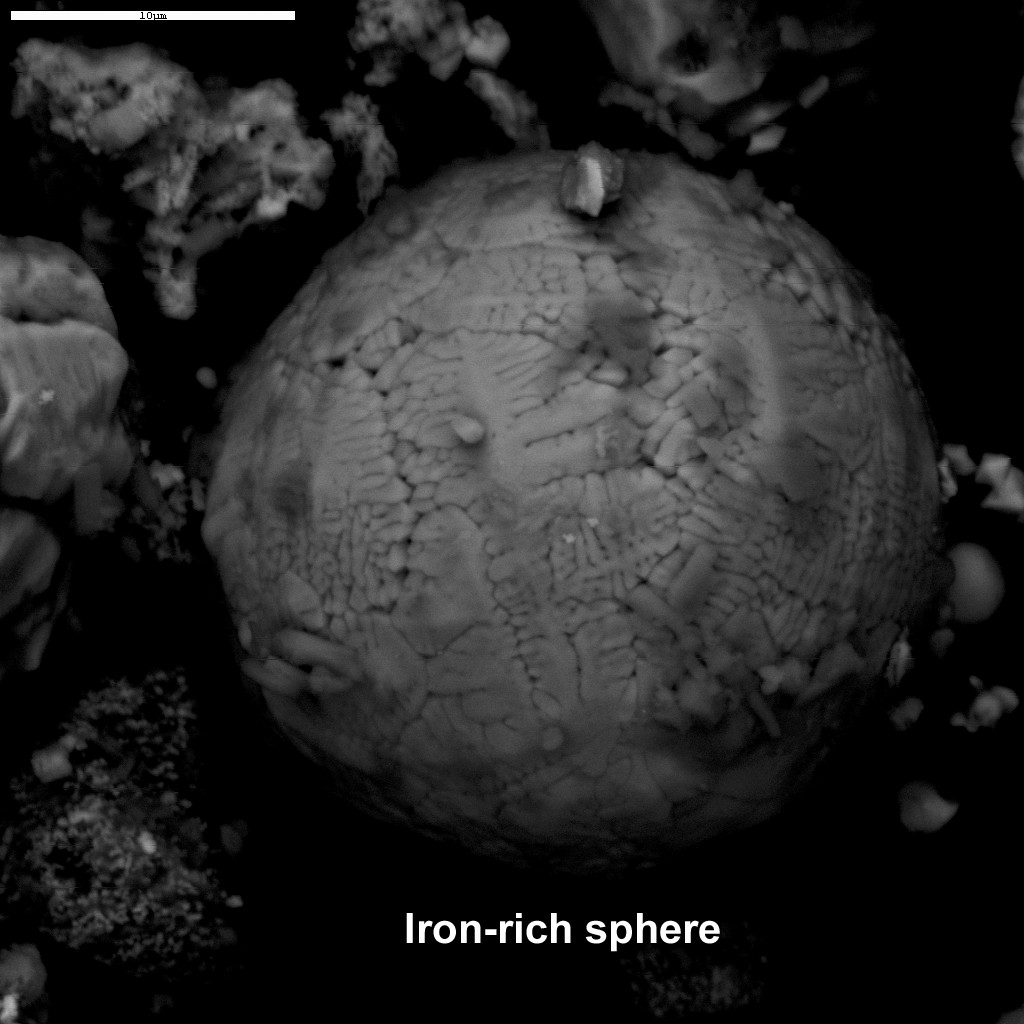
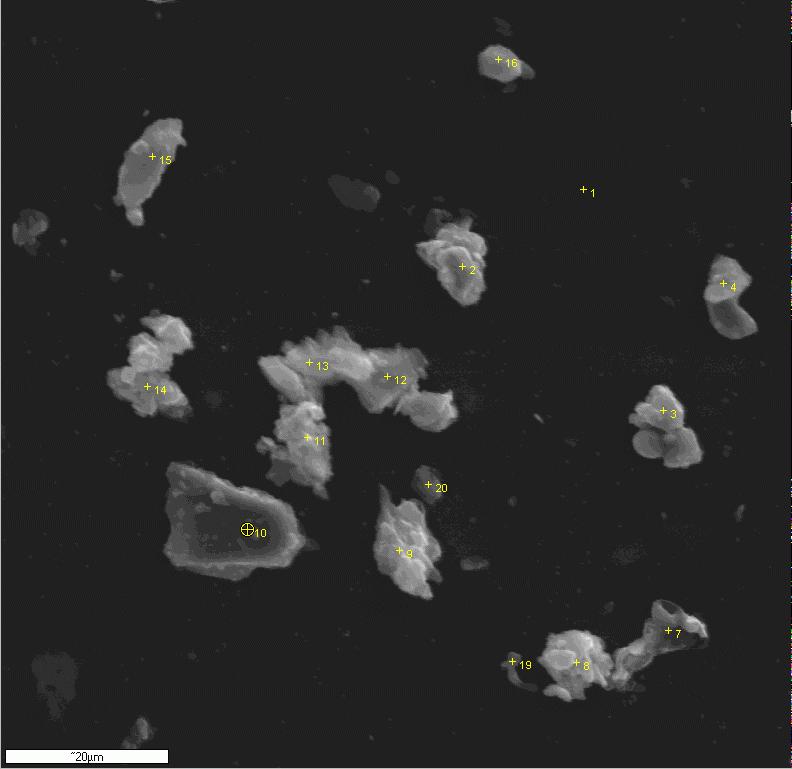
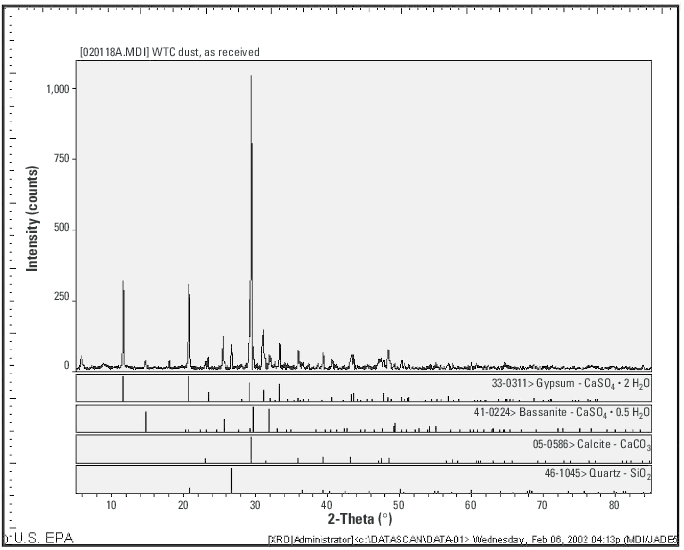
Figures 82-84. The issue is not simply "spheres exist." It is the local thermal history implied by iron-rich spheres carried together with comparatively weak soot-dominant framing.
- Observation: Microscopic analysis reports iron-rich spheres on the order of tens of micrometers, and the carried framing in these samples is not strongly soot-dominant.
- Model A local path: a bounded high-temperature process history in which fire-related pathways, torch slag, and localized hot mechanical processes still account for iron-rich spheres without a selective electrodynamic heating account.
- Local discriminator: Iron-rich spheres do not by themselves decide the mechanism. What matters here is whether the thermal and interface record reads like ordinary dirty fire products or like a more selective heating history in which iron-bearing phases soften or melt without a comparable bulk carbonized surround.
- Local Model B reading: Electron-cyclotron resonance (ECR)-regime selective coupling is the leading local reading where iron-rich spheres, weak soot framing, and limited adjacent thermal damage are carried together.
- Constraint judgment: Any admissible mechanism class carried forward from this report must explain the local heating history implied by selective spheroidization without collapsing it into a bulk fire account by default.
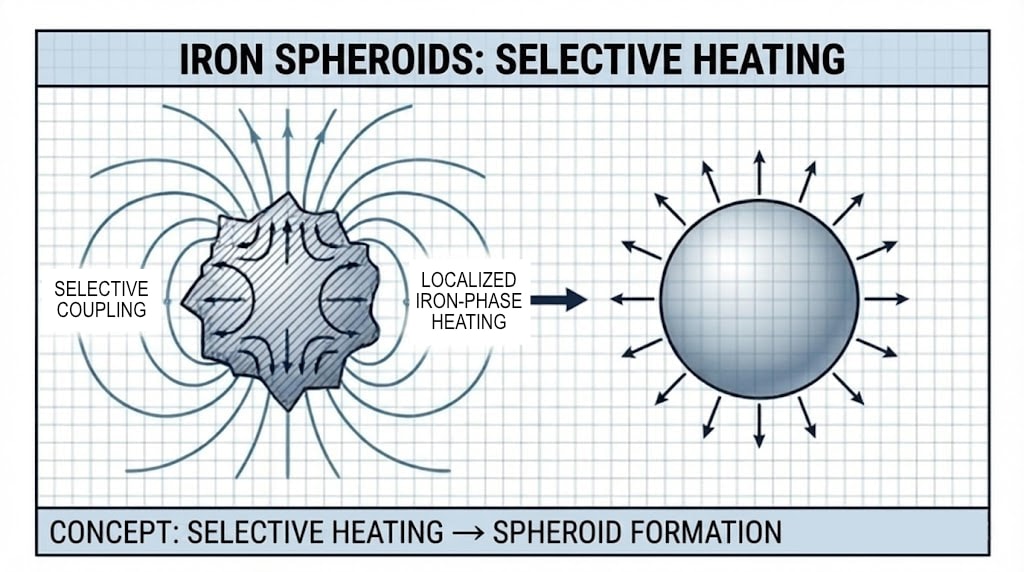
Diagram 37. The burden here is selective thermal history, not merely the presence of molten-looking particles.
4. CORROBORATING SCENE AND THERMAL CHECKS
Objective: carry limited cross-checks on lofting geometry and thermal history without treating them as independent load-bearing proof.
DATA SET A: Ground-Plane Confinement
Scene framing
- Observation: The carried visual pattern places the strongest particulate motion near the ground plane around feet, tires, and debris surfaces rather than as a broad, uniformly buoyant smoke column.
- Use in this report: This sharpens Evidence File A's non-buoyant lift problem. It remains corroborating rather than self-sufficient.
DATA SET B: Wetting and Steam Absence
Debris-truck and wetting images
- Observation: Water application does not show an obvious steam signal in the carried imagery while particulate emission continues.
- Use in this report: This reinforces the limited thermal-buoyancy reading at the observation point. It does not, by itself, eliminate all hidden hot-spot possibilities.
Cross-check: These scene checks support a local picture of weak point-of-observation thermal buoyancy and persistent near-ground suspension. The actual closure claim still depends on lofting physics, ultrafine speciation, and morphology.
5. LOCAL MECHANISM READING
The relevant question here is not full SCIE architecture. It is the local mechanism reading required if Model A fails this suspension and ultrafine test.
At the level of this report, the strongest local reading is one particulate environment doing three things at once: remaining suspended near the ground plane, carrying a stronger ultrafine production pathway than ordinary crushing and combustion, and selectively heating iron-bearing phases. Fine material is not simply settling and occasionally resuspending as ordinary dust; it is being maintained, produced, and selectively altered within the same local environment.
The local mechanism stack is therefore intentionally split:
- Dielectrophoretic (DEP)-like lift: carries the local suspension and sorting problem.
- Interferometric Molecular Dissociation (IMD)-type dissociation: carries the broad mixed-material ultrafine production problem if speciation supports building-material phases in the sub-micron mode.
- Coulomb-type fragmentation / dielectric saturation: carries the concrete- and ceramic-side breakup term where the ultrafine record resolves toward charge-driven dielectric failure rather than a mixed-source dissociation picture.
- Electron-cyclotron resonance (ECR)-regime selective coupling: carries the iron-rich sphere and selective softening problem.
These lines do different work within the same particulate environment: DEP-like lift carries the suspension term, IMD-type dissociation carries the broad ultrafine production term, Coulomb-type fragmentation carries the dielectric-side breakup branch where concrete or ceramic failure becomes the better fit, and ECR-regime coupling carries the selective iron-phase heating term. The report's strongest local line is the conjunction of non-buoyant suspension and a non-soot primary ultrafine production pathway. The sphere file sharpens that same selective-coupling environment when the surrounding thermal framing remains selective.
If the lofting resolves into ordinary turbulence and buoyancy, if the ultrafine mode resolves into soot and sulfate-dominant combustion aerosols, and if the sphere record resolves into ordinary dirty fire products, that stronger local mechanism picture is neutralized at the report level.
6. FORENSIC TEST PROTOCOL
Objective: distinguish ordinary fire and resuspension pathways from a stronger suspension, dissociation, and selective-coupling account.
TEST A: Interface Speciation and Contact Morphology
- Sample: agglomerated dust or "fuzzball" material containing iron-rich spheres and fibers.
- Model A expectation: adjacent organics should show ordinary thermal degradation or charring if the iron-rich fraction reflects ordinary fire-driven heating.
- Alternative-path expectation: iron-rich spheres physically fused to or entangled with weakly charred or uncharred cellulose, consistent with selective heating or post-deposition contact requiring closer discrimination.
TEST B: Ultrafine Mode Speciation
- Sample: the 0.09-0.26 μm fraction and adjacent fine-mode bins.
- Model A expectation: soot, sulfates, and combustion-related secondary aerosol phases should dominate the ultrafine mode.
- Alternative-path expectation: primary building-material phases, including refractory silicates and iron-bearing signatures, should appear in the ultrafine mode at levels that burden an ordinary combustion reading.
TEST C: Near-Ground Suspension Discriminator
- Sample: image sequences, height-dependent particulate density, and any carried scene reconstruction of local flow.
- Model A expectation: lofting should close through identifiable turbulence, buoyancy, or resuspension drivers.
- Alternative-path expectation: persistent near-ground confinement and weak thermal indicators should continue to burden a purely passive settling and resuspension account.
7. LOCAL MECHANISM JUDGMENT
- Primary burden on Model A: Evidence File A burdens ordinary entrainment and buoyancy by carrying localized particulate lofting without a clearly identified local driver. Evidence File B burdens a soot and sulfate-dominant combustion reading if the ultrafine mode is materially composed of primary building-material phases. Evidence File C burdens a bulk-fire account if the sphere record and surrounding thermal framing remain selective rather than dirty and uniform.
- Rule 1 role in this report: this file does not set the gravity-funded comminution ceiling; it sharpens the observed-outcome side of Rule 1 by asking what the exported/airborne fine mode actually contains and whether the ultrafine record resolves toward primary building-material phases rather than ordinary combustion aerosol.
- Relation to $\(f_{\mathrm{obs}}\)$: this file chiefly pressures the lower and central envelopes for $\(f_{\mathrm{obs}}\)$ by asking whether deposited and airborne fine material is really primary building-material phase output rather than soot- and sulfate-dominant secondary aerosol.
- Measurement refinement still needed: The strongest remaining uncertainties are airborne versus settled sampling, exact ultrafine speciation, and how much of the lofting record can be closed by bounded local turbulence or hidden thermal structure.
- Local mechanism judgment: This report supports a linked local mechanism picture of non-buoyant suspension, stronger ultrafine production, and selective heating. Within that picture, DEP-like lift is the leading local reading for lofting, IMD-type dissociation is the leading broad local reading for primary ultrafine production where the mode remains mixed-material, Coulomb-type fragmentation / dielectric saturation is the dielectric-side reading where the record isolates concrete-, masonry-, or ceramic-dominant breakup, and ECR-regime selective coupling is the leading local reading for the iron-rich sphere phenotype.
- Scope limit: This report does not by itself close the total comminution ledger or the full site-wide delivery architecture. It establishes a particulate-environment burden that later reports and the bridge-level documents must still integrate.
- Handoff to downstream mechanism development: Report 7 carries the broader thermal-history problem, Report 8 carries the steel-regime oxidation and ECR side, Report 3 carries the mass-fate ledger, and the system-level integration is then taken up in synthesis, bridge, and reconstruction.