Thermodynamic Signatures and Inverse Thermal Reactions
1. ABSTRACT
Standard Model Expectation: Ordinary combustion and incandescence carry predictable thermal collateral. If hydrocarbon or debris fires are hot enough to melt or strongly alter metals, nearby combustibles should char or ignite, active wetting should generate visible steam where contact is real, and bright incandescence should track commensurate surface heating.
Empirical Contradiction / Local Mechanism Problem: The strongest scenes in this report behave as inverse thermal reactions rather than straightforward combustion calorimetry. They show conductive alteration next to intact paper or flags, fuming/smoking zones with limited steam behavior under wetting, working hydraulic systems in direct contact with supposedly extreme-hot debris, and glow signatures that do not map cleanly onto the expected thermal collateral. Taken together, these signatures shift the local question from "how big was the fire?" to "what kind of energy deposition and emission process was actually present?"
Audit Objective: To determine whether the observed thermal-appearing phenomena can be closed by chemical combustion and ordinary heat transfer, or whether the local signature cluster is better carried as a combination of conductor-selective coupling, cool-to-warm aerosol emission, and possibly non-incandescent luminosity.
Audit Rule(s): Audit Rule 2 (The Fourier/Joule Constraint) for thermal selectivity and missing combustion collateral. Supporting: Audit Rule 3 (The Geometric Flux Constraint) where localized clusters or sharp cutoffs matter to the thermal reading.
Model A steelman (and the local mechanism question)
- Steelman: Ordinary fire closure here requires a single documented thermal history that closes the conductor-dielectric inversion, the wetting/contact scenes, and the visible-emission scenes together under bounded scene geometry and timing.
- Discriminator: The dossier's trap here is not merely "fires looked odd." It is the repeated mismatch between asserted heat and missing collateral: conductors altered while nearby paper survives, wetting without the expected steaming behavior, and visible glow without the surrounding thermal consequences a simple incandescence reading would predict.
- What Model A must show: one concrete combustion and heat-transfer reconstruction that matches the missing-collateral pattern across files rather than dispersing the burden into separate scene-specific exceptions.
Local Model B capsule
- What inverse thermal reaction means here: a thermal-looking or fire-like scene whose collateral record does not behave like ordinary combustion or bulk heating.
- What the leading local readings are: conductor-selective coupling for metal-versus-paper cases, cool-to-warm aerosol emission rather than hot smoke where steaming and contact behavior do not line up, and non-incandescent luminosity where visible glow outruns the thermal collateral.
- Why it fits here: this report carries one linked thermodynamic inversion environment at the scene level: asserted heat without the collateral record ordinary combustion should leave behind.
- This full linked inversion picture is neutralized only if: one documented ordinary-thermal reconstruction closes the paper/metal scenes, the wetting/contact scenes, and the emission scenes together. Generic appeals to shielding, cool crusts, poor wetting, airflow, or image ambiguity do not discharge the report on their own.
See: APPENDIX — Model A Steelman & Failure Modes (thermal-history discriminator: C3a).
2. CONTROL PARAMETERS
Thermodynamic System Definition: We treat the debris field and street-level scenes as a heat-transfer and phase-change problem, then test whether the observed selectivity and missing collateral require non-equilibrium or conductor-selective alternatives.
- Radiant flux constraint ( $\(q_{rad}\)$ ):
- Heat-flux contradiction: If metal is reported as severely altered by external fire, nearby exposed low-mass combustibles are generally expected to pyrolyze or ignite unless the record shows they were not true co-exposures to the same effective heat field.
- Audit constraint: If severely altered metals coexist with intact paper/plastics under the same claimed heat field, a purely external thermal-radiative/convective pathway fails Rule 2 in this report.
- Competing mechanism classes: conductor-selective internal power deposition for the metal-targeting cases, and non-combustion aerosol or emission mechanisms for the cool-fume / glow cases.
Phase-change and wetting rule:
- Water expands roughly 1600:1 when flashing to steam near $\(100^\circ\text{C}\)$ at atmospheric pressure.
- If liquid water contacts extensive near-surface debris well above the boiling threshold, visible steaming or flash-boiling behavior is generally expected.
- Persistent absence of such behavior under documented wetting is therefore more compatible with lower accessible-surface temperatures or non-combustion aerosol emission than with a broad near-surface inferno.
Luminosity rule:
- Yellow/orange incandescence ordinarily implies high radiance temperatures.
- If that visual appearance is asserted without commensurate nearby ignition or contact-heating collateral, the emission mode has to be tested rather than assumed to be ordinary bulk incandescence.
3. DATA CURATION & ANALYSIS
EVIDENCE FILE A: Paper Survival Versus Conductive Alteration
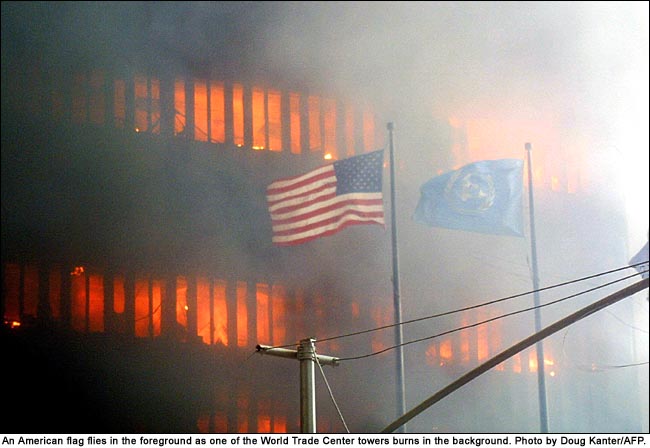
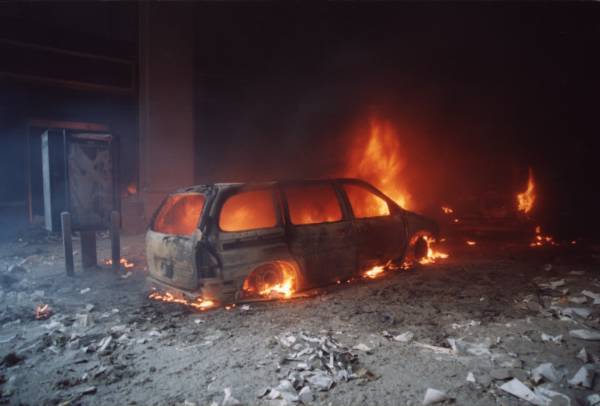
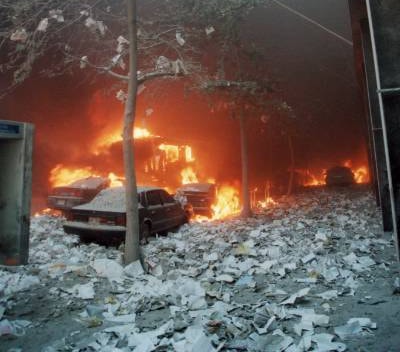
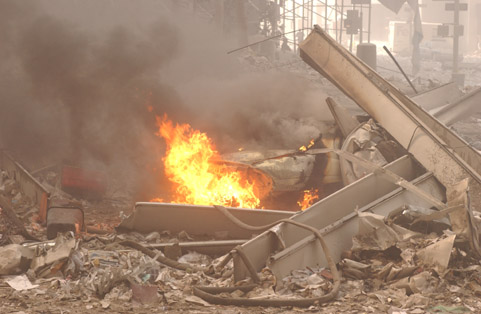
Figures 56-59. Paper, flags, foliage, and plastic survivals adjacent to thermal-looking scenes and altered vehicles, illustrating the report's thermodynamic inversion problem.
- Observation: Images show intact flags, paper, foliage, and plastic objects in close visual association with burning or strongly altered conductive structures and vehicles.
- Model A local path: a scene reconstruction in which the surviving dielectrics were not true co-exposures to the same effective heat field as the altered conductors or vehicles, and that still reproduces the asserted metal-state changes.
- Local discriminator: The strongest version of this file is not isolated survival. It is repeated dielectric survival across several scene types where the surrounding thermal narrative is supposed to be intense. If the local heat field was really broad enough to produce the asserted metal-state changes, these low-mass dielectrics should not keep recurring as intact neighbors unless the record shows they were not true co-exposures.
- Local mechanism reading: The leading local reading is conductor-selective coupling of the same general kind developed in Report 6: energy deposition tracks conductive pathways more strongly than nearby low-loss dielectrics. In this report the point is thermodynamic inversion, not just vehicle geometry.
- Constraint judgment: Any admissible mechanism class carried forward from this report must explain why the reported heat field altered conductors or vehicles more strongly than adjacent paper, flags, foliage, or plastics.
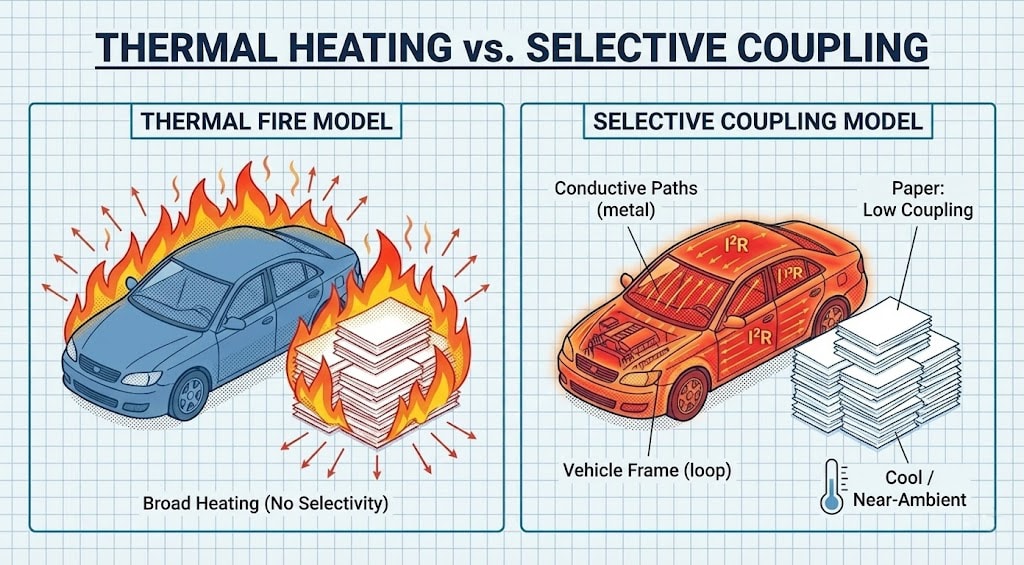
Diagram 23. Broad fire versus selective coupling: the discriminator is not "some fire" but whether the thermal collateral distributes normally.
EVIDENCE FILE B: Cool Fuming and Wetting Failure
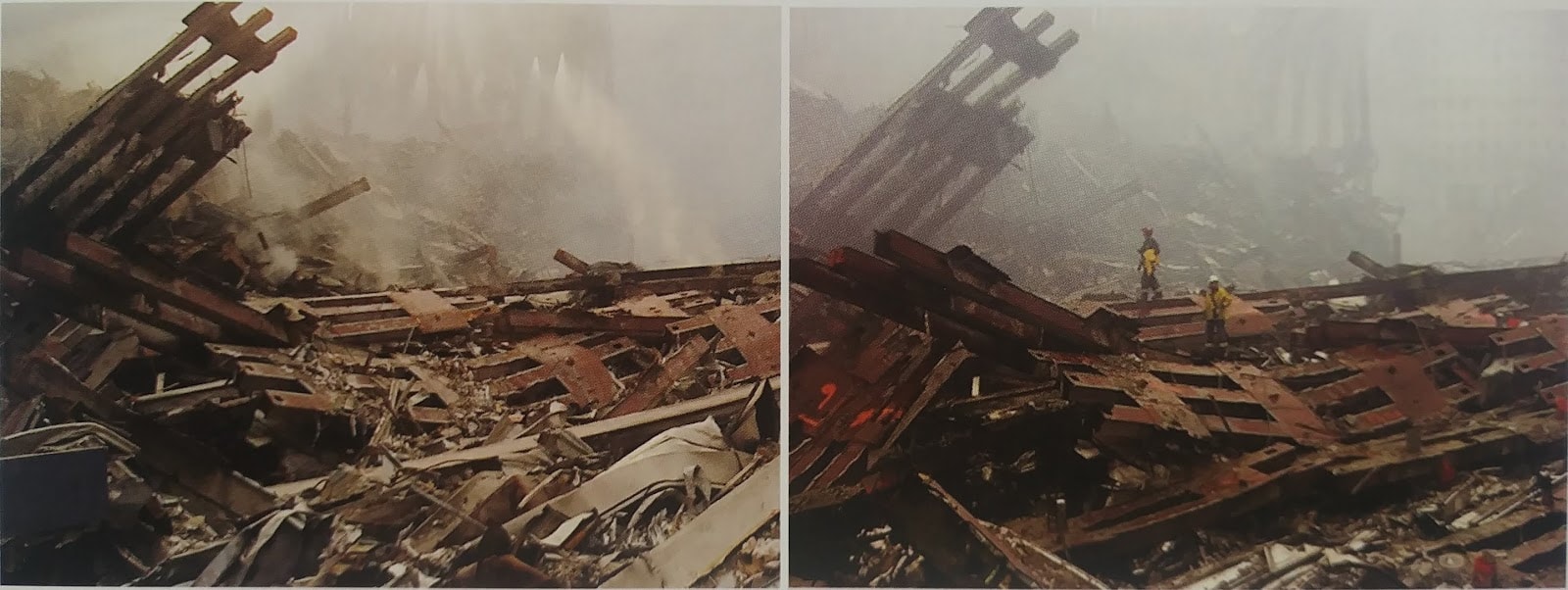
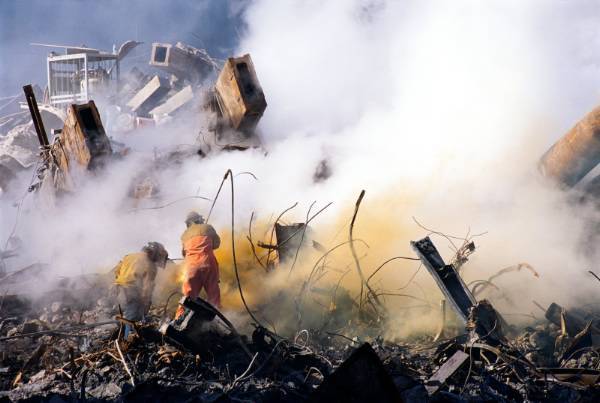
Figures 60-61. Fuming debris, wetting behavior, and equipment survival used as a thermodynamic discriminator between hot combustion and cooler aerosol emission at the accessible surface.
- Observation: Debris zones emit visible fumes or "smoke" while workers move through them, water application is not obviously producing strong steam behavior in the depicted scenes, and oxy-fuel hoses appear to survive contact or drape across the rubble.
- Model A local path: real weak-contact or lower-temperature accessible-surface conditions documented at the scenes themselves, together with an ordinary fire history reproducing the observed fuming record. Generic appeals to cool crusts, airflow, or steam/smoke ambiguity do not close this file on their own.
- Local discriminator: The report does not need to prove the entire pile was cool. It only needs the narrower thermodynamic point: if these accessible near-surface zones were broadly at extreme temperatures under real wetting/contact, the steaming and contact collateral should usually be stronger than shown. The scene record therefore burdens the idea that visible fuming automatically equals a broad open-flame surface inferno.
- Local mechanism reading: The leading local reading is cool-to-warm aerosol emission rather than hot combustion smoke at the accessible surface. Where particulate morphology later supports it, this can be carried as Interferometric Molecular Dissociation (IMD) in an athermal aerosol/ionic mode rather than as soot-dominant combustion smoke.
- Constraint judgment: Any admissible mechanism class carried forward from this report must distinguish hot smoke from cooler aerosol emission and explain why wetting/contact behavior failed to produce the stronger steam and equipment-damage collateral a hotter surface account would predict.
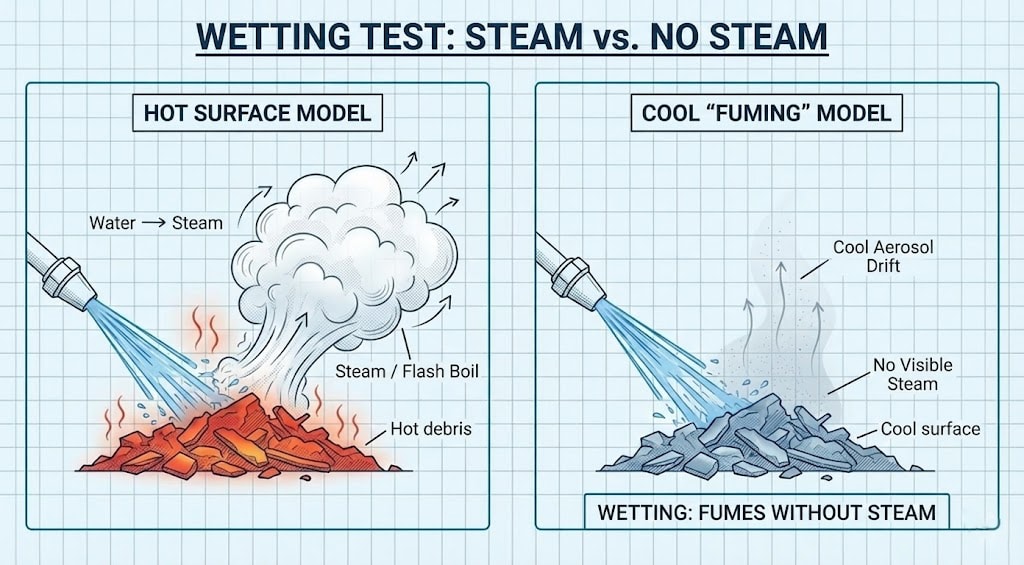
Diagram 24. Wetting test: hot-surface steaming versus cool-fume aerosol drift.
EVIDENCE FILE C: Hydraulic and Elastomer Survival at Contact
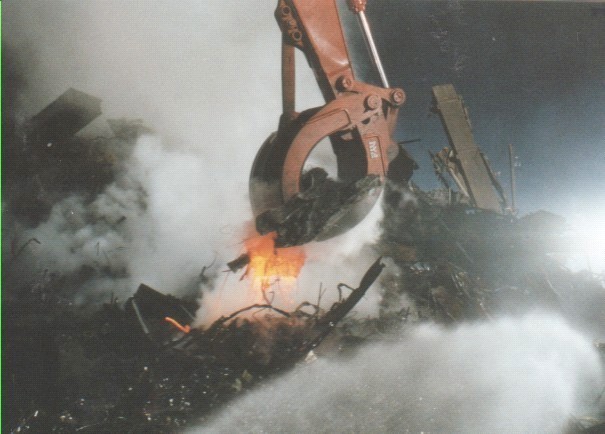
Figure 62. Machinery survival at contact used as a bounded near-surface temperature check rather than as a claim about the entire debris field.
- Observation: Heavy machinery and hydraulic systems appear to operate in direct contact with fuming rubble without obvious immediate seal or hose failure.
- Model A local path: equipment-contact conditions under which the machinery was not in repeated contact with the same effective near-surface temperature field being asserted for the rubble, or else an asserted heat state that still matches the observed equipment survival.
- Local discriminator: This is a near-surface constraint, not a claim about the whole pile. Common elastomer hoses and seals are still in tension with claims of extensive near-surface extreme heat if they remain in repeated working contact without obvious failure. That does not rule out deeper hot pockets; it burdens the stronger claim of a broadly extreme-hot accessible surface.
- Local mechanism reading: The local reading is a lower near-surface thermal state than the most extreme surface claims imply, compatible with the same cool-fume/aerosol picture carried in Evidence File B.
- Constraint judgment: Any admissible mechanism class carried forward from this report must explain why surface-contact equipment remains operational if the accessible surface is being described as persistently extreme-hot.
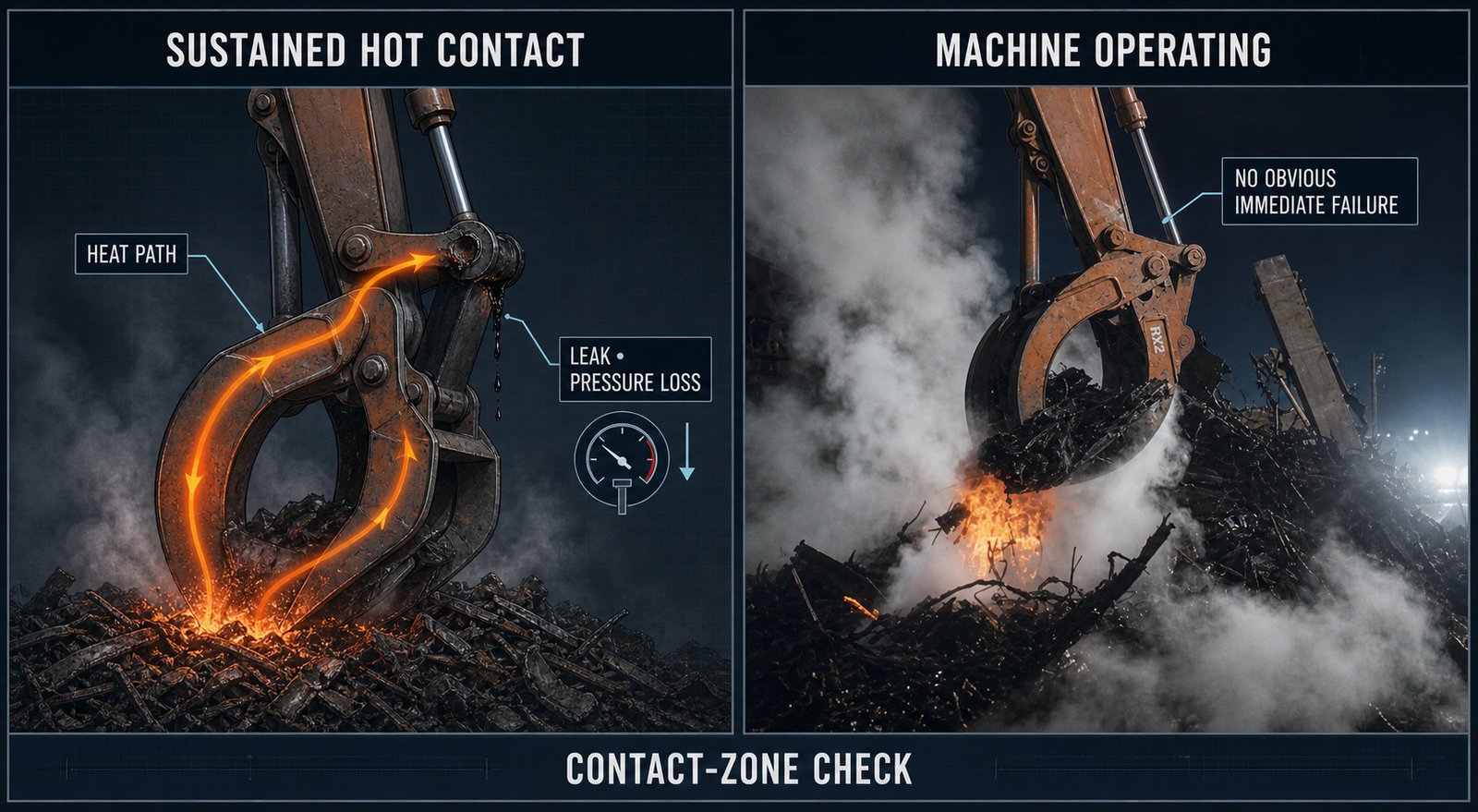
Diagram 25. Hot-contact claim versus machine operation: hydraulic survival is a bounded contact-zone audit, not a total-pile thermometer.
EVIDENCE FILE D: Luminosity Without Commensurate Thermal Collateral
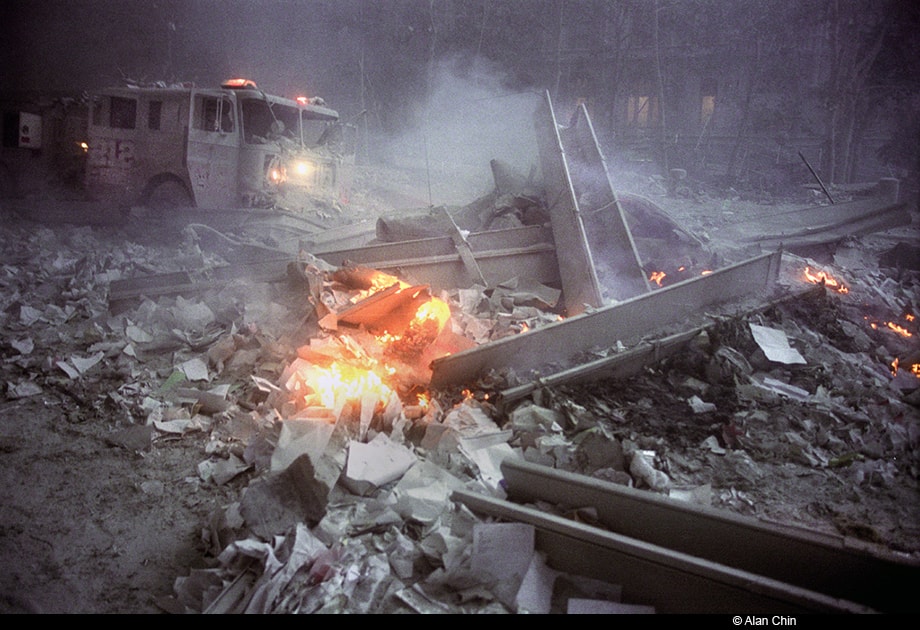
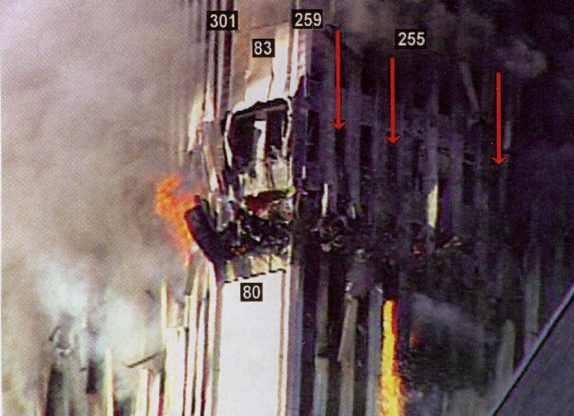
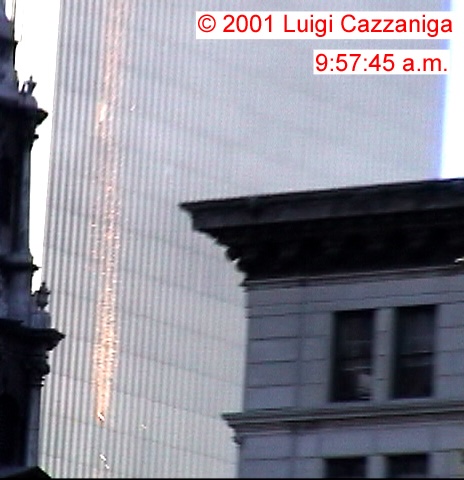
Figures 63-66. Glow cases retained here as a secondary emission-mode question: if luminosity is read as incandescence, the thermal collateral has to match.
- Observation: Some materials are reported as glowing yellow-orange while adjacent materials do not show the amount of burning or heating that a simple high-temperature incandescence reading would seem to imply.
- Model A local path: a bounded thermal/emissivity account in which molten metal, organics, imaging effects, or localized contact geometry still explain the reported glow without requiring a non-incandescent emission mode.
- Local discriminator: This is a secondary file in Report 7, but it still imposes a useful rule: if the glow is ordinary incandescence at the asserted temperature range, the nearby thermal collateral should broadly agree. Where that agreement is weak or absent, the emission mode has to be tested rather than assumed.
- Local mechanism reading: The lower-confidence local reading is non-incandescent luminosity or other non-equilibrium emission. This remains secondary until spectral or photometric discrimination is stronger than the image record alone.
- Constraint judgment: Any stronger emission claim here still has to be bounded by photometric controls and nearby thermal collateral. Until that is done, the glow cases remain secondary and non-load-bearing for the report's main discriminator.
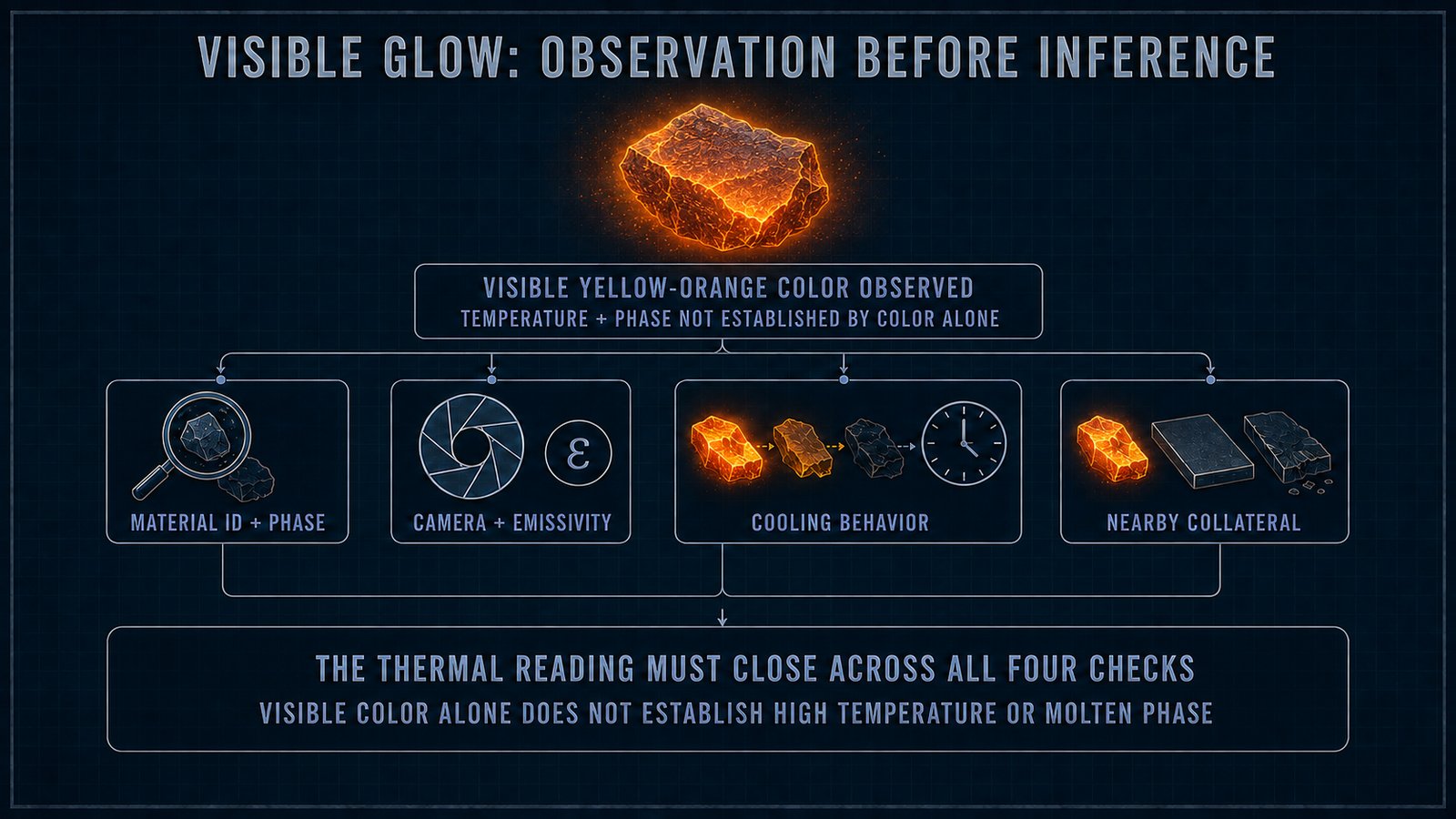
Diagram 26. Visible color alone does not establish high temperature or molten metal; duration, collateral heating, and calibrated measurement remain necessary checks.
4. CORROBORATING SENSORY CHECKS
Objective: carry witness-level thermal impressions only as secondary cross-checks, not as the main proof of the report's thermodynamic claims.
DATA SET A: Cool Air in a Thermal-Looking Zone
Interior particulate exposure
- Observation: Some witnesses described zero-visibility "smoke" or particulate zones as cool to breathe or pass through, and some suppression accounts describe water application with little visible steam.
- Use in this report: This is compatible with cool particulate aerosol rather than hot combustion smoke at the point of exposure and with the weaker-steaming reading carried in Evidence File B, but it remains corroborating rather than decisive.
DATA SET B: Heat Sensation Without Visible Flame
Upper-strata and remote reports
- Observation: Some reports describe intense heat sensation without a clear local flame front.
- Use in this report: This stays secondary. It can support the broader non-flame heating question only where it aligns with stronger scene or instrumented evidence, not as a standalone mechanism proof.
DATA SET C: Tissue/Clothing Mismatch Claims
Reported visual/physical disconnect
- Observation: Some descriptions report severe biological damage alongside more intact nearby coverings or materials.
- Use in this report: This is retained only as a weak flag for later medical/forensic treatment. It should not carry the thermodynamic case by itself.
5. LOCAL MECHANISM READING
The relevant question here is the local mechanism reading, not a full architecture claim.
At the level of this report, the strongest local reading is non-equilibrium thermal behavior with selective coupling, not scenes that are merely hotter than expected. Some scenes look thermally intense while lacking the collateral expected from ordinary combustion or broad external heating, while others show cool-to-warm aerosol emission where open-flame surface burning should dominate.
Within that picture, the leading local mechanism families are:
- Conductor-selective coupling / selective impedance heating: carries the metal-versus-paper and vehicle-adjacent cases
- Interferometric Molecular Dissociation (IMD) in an athermal aerosol mode: carries the cool-fume cases where aerosol composition and morphology support a material-derived aerosol rather than soot-dominant smoke
- Non-incandescent luminosity: a secondary carry-forward reading for the glow cases, pending stronger photometric or spectral discrimination
The report's strongest local line is the conductor-selective / cool-fume pair. The glow cases remain secondary unless stronger photometric or spectral controls arrive.
What this section establishes is narrower and stronger than a full architecture claim: apparent thermal intensity in these scenes cannot be read as direct calorimetry without checking the missing combustion collateral, the wetting/contact behavior, and the emission mode.
Even if every glow case is set aside, the conductor-selective / cool-fume pair still carries the report's main thermodynamic inversion burden.
The main inversion reading is neutralized only if one documented ordinary-thermal reconstruction closes the paper/metal scenes and the wetting/contact scenes together as one fire history. The glow cases are a secondary emission-mode question, not a prerequisite for the report's main discriminator.
6. FORENSIC TEST PROTOCOL
Objective: distinguish ordinary combustion/heat-transfer histories from selective coupling, cool aerosol emission, and non-incandescent glow.
TEST A: Cellulose and Polymer Burn-History Check
- Sample: Paper, flags, foliage, or plastics recovered adjacent to strongly altered vehicles or conductive structures.
- Standard expectation: browning, charring, shrinkage, or pyrolytic embrittlement consistent with broad thermal exposure.
- Local-mechanism expectation: preserved fibers or polymers with substantially less thermal collateral than the nearby metal-state story would predict.
TEST B: Paint-to-Metal Directionality / Oxide Gradient Check
- Sample: Conductor-altered vehicle paint/metal interfaces and cross-sections.
- Standard expectation: outside-in burn history with coating failure preceding or tracking metal oxidation.
- Local-mechanism expectation: substrate-first or conductor-routed heating signatures, with steep near-surface gradients and interface failure inconsistent with simple external soak.
TEST C: Aerosol Composition and Morphology Audit
- Sample: Deposited fume/smoke material from the strongest cool-fume scenes.
- Standard expectation: soot-dominant combustion products and residues consistent with hot smoke.
- Local-mechanism expectation: mineral/metal-rich particulate, non-combustion aerosol signatures, or morphology inconsistent with ordinary soot-dominant smoke.
TEST D: Luminosity Discrimination
- Sample: High-quality imagery or instrumented optical data from the glow cases.
- Standard expectation: photometric behavior consistent with bulk incandescence and matching nearby thermal collateral.
- Local-mechanism expectation: spectral or photometric behavior that departs from ordinary incandescence, or glow behavior that outruns the expected thermal collateral.
7. LOCAL MECHANISM JUDGMENT
-
Local thermodynamic result: The strongest cases in this report are not just "odd fires." They are thermodynamic inversion cases in which the asserted heat field and the collateral record do not line up cleanly.
-
Why Model A is burdened here: Model A must still explain why conductors or vehicles are strongly altered while nearby dielectrics survive, why fuming/wetting/contact scenes do not look more like ordinary hot-surface combustion, and why some glow cases do not carry the thermal collateral expected from a simple incandescence reading.
-
Local mechanism judgment: Within that scope, the report supports a combined local mechanism picture of conductor-selective coupling plus cool-to-warm aerosol emission, with non-incandescent luminosity retained as a secondary carry-forward reading. In plain terms, the report favors selective coupling and non-equilibrium thermal-like phenomena over a unitary combustion-only account.
-
Measurement refinement still needed: This report does not by itself settle exact aerosol composition in every scene, exact surface temperatures under wetting/contact, the emission mode of every glow case, or whether any human heat-sensation report reflects field-mediated heating rather than environmental conditions. Those are local refinement questions; they do not erase the report's main conductor-selective / cool-fume burden.
-
Handoff to downstream mechanism development: Report 6 carries the strongest conductor-regime vehicle record, Report 2 carries the particulate-release side, Report 8 carries the steel-regime oxidation and coupling side, and Report 15 carries the architecture-bearing integration. Full system integration is then carried in synthesis, bridge, and reconstruction.