
The SCIE Hypothesis on WTC // 911
The official account assumes gravity, impact, and office fires supplied all the energy the event needed, with nothing left unaccounted for. When you treat the footage and physical measurements as facts any explanation must satisfy, that standard story starts breaking down in one area after another. Half a million tons of building turned largely to dust while the ground barely shook and the debris pile was almost flat. The damage includes clean planar cuts and bounded voids where chaotic collapse would usually leave a mess, and steel failed violently while non-conductive material right beside it often did not. The measurements tell a harder story. In this episode we open the full case in three steps. First we treat the footage and physical record as facts any explanation must satisfy, across energy, seismic, geometry, and how different materials were affected. Second we ask what kind of physics those facts keep pointing to when you read them together, including selective response in conductors versus insulators and destruction that does not behave like ordinary fire or crush. Third we introduce the SCIE hypothesis (Spatially-Constrained Interferometric Event): overlapping wave geometry concentrating intense effects in bounded places, with proposed mechanism paths for how steel, concrete, and other materials could respond, and a first-pass reconstruction from regional conditions through the towers to the event timeline. This is the big-picture entry point.
The official account assumes gravity, impact, and office fires supplied all the energy the event needed, with nothing left unaccounted for. When you treat the footage and physical measurements as facts any explanation must satisfy, that standard story starts breaking down in one area after another. Half a million tons of building turned largely to dust while the ground barely shook and the debris pile was almost flat. The damage includes clean planar cuts and bounded voids where chaotic collapse would usually leave a mess, and steel failed violently while non-conductive material right beside it often did not. The measurements tell a harder story.
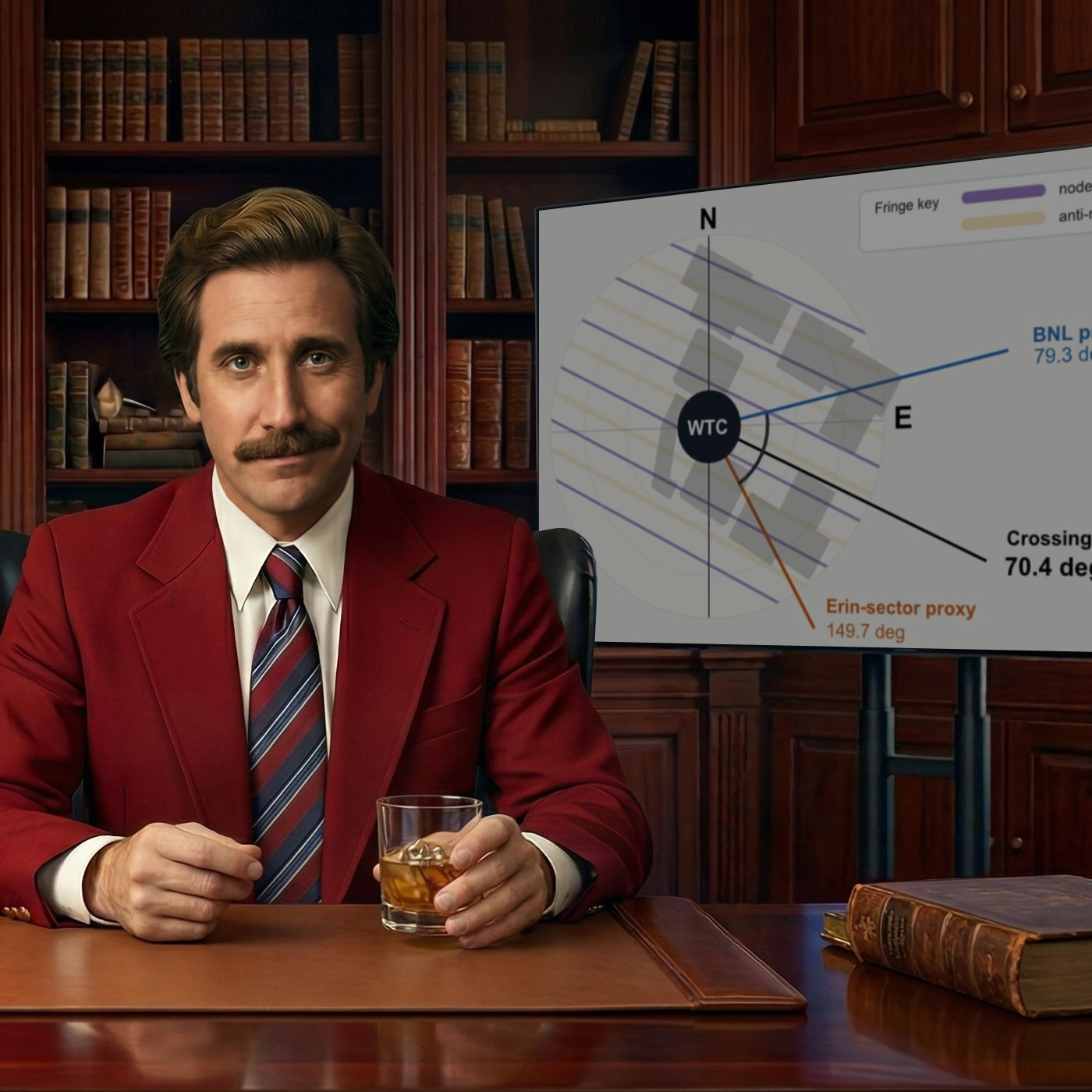
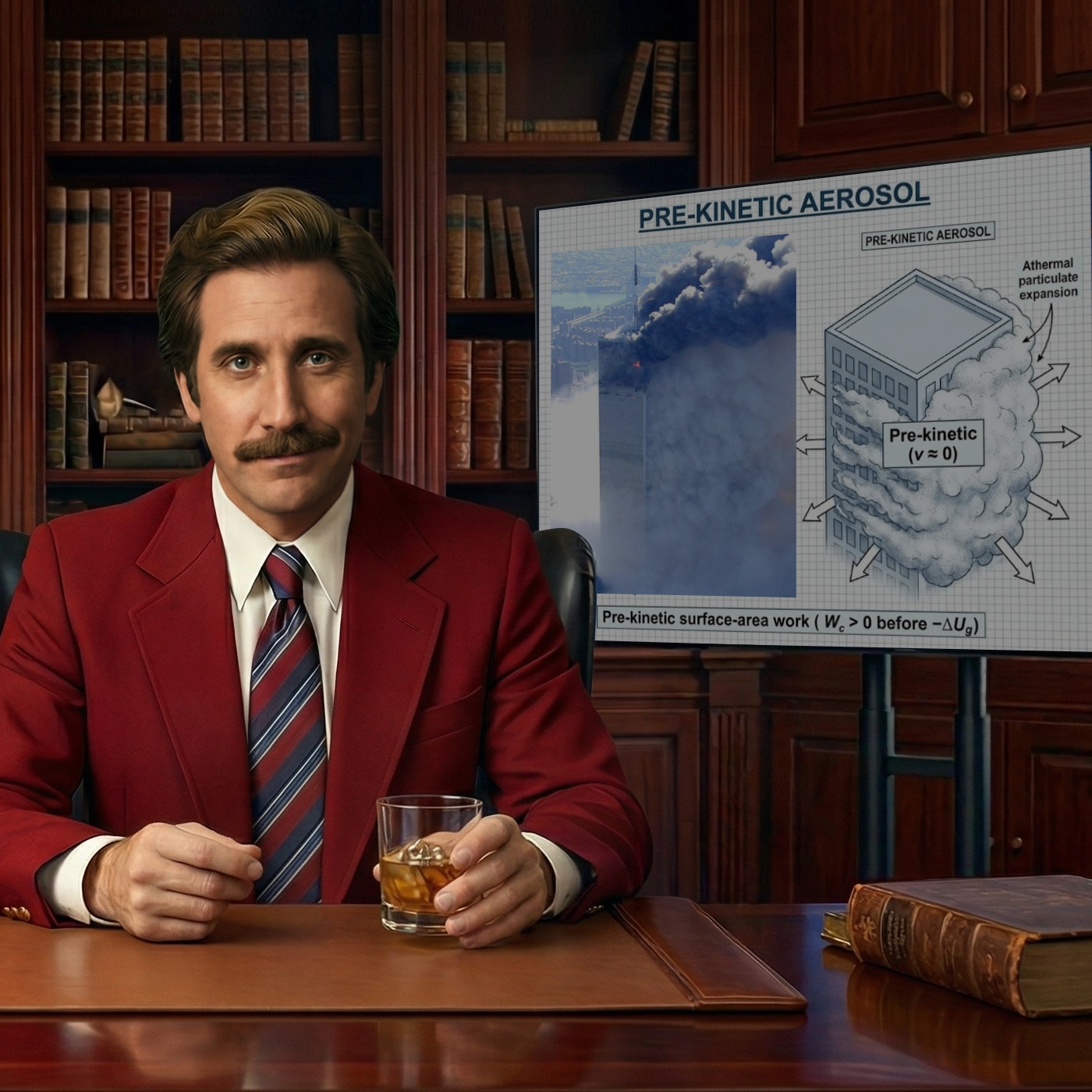
In this episode we open the full case in three steps. First we treat the footage and physical record as facts any explanation must satisfy, across energy, seismic, geometry, and how different materials were affected. Second we ask what kind of physics those facts keep pointing to when you read them together, including selective response in conductors versus insulators and destruction that does not behave like ordinary fire or crush. Third we introduce the SCIE hypothesis (Spatially-Constrained Interferometric Event): overlapping wave geometry concentrating intense effects in bounded places, with proposed mechanism paths for how steel, concrete, and other materials could respond, and a first-pass reconstruction from regional conditions through the towers to the event timeline.
This is the big-picture entry point.